

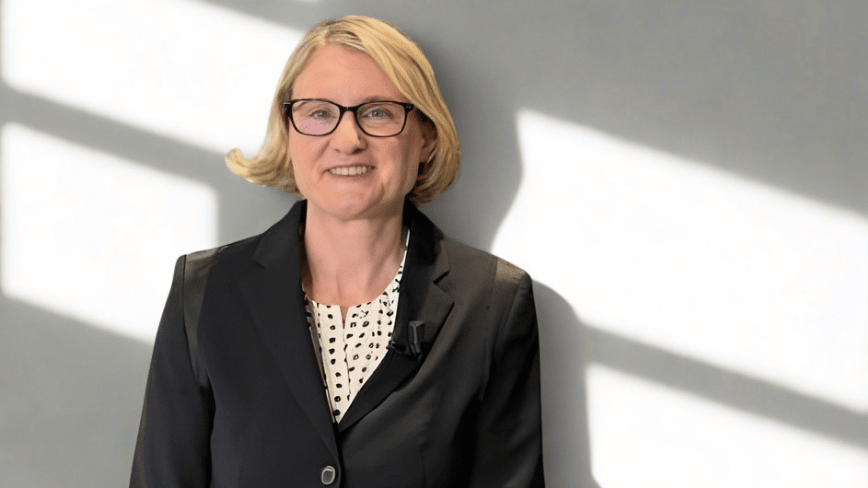
In short: Oracle has appointed Hilary Maxson, the former executive vice president and group chief financial officer at Schneider Electric, as its new chief financial officer, effective April 6, 2026. Maxson will report to chief executive Clay Magouyrk and assumes this role during a critical time as Oracle commits $50 billion in capital expenditure for the current fiscal year, lays off up to 30,000 employees, and plays a key role in the Stargate AI data centre joint venture with OpenAI and SoftBank.
A CFO Role Reinstated After a Decade
For over ten years, Oracle centralized its financial oversight at the highest leadership level. Safra Catz, who became chief executive in 2014, held the title of principal financial officer, merging roles typically divided in similar-sized companies. This changed in September 2025 when Catz became executive vice chair of Oracle’s board, and Clay Magouyrk and Mike Sicilia were appointed co-CEOs. This transition left Oracle's global finance organization without a dedicated leader, a gap Doug Kehring temporarily filled. Maxson's appointment formalizes this role after a six-month interim period, allowing Kehring to refocus on Oracle's commercial operations.
Magouyrk commented on the appointment, emphasizing Oracle's focus on capital-intensive projects: “We are pleased that we found a financial leader who aligns with our culture of strong financial and operational discipline and possesses experience in scaling capital-intensive global organizations. Hilary’s background spans industrial, infrastructure, and software businesses — areas where capital intensity and execution excellence are crucial for success.”
The Schneider Electric Connection
Maxson, 48, spent nearly nine years at Schneider Electric, a French energy management and automation giant with over $45 billion in annual revenue. She joined Schneider in 2017 as group CFO, overseeing its transformation from a traditional electrical equipment manufacturer to a digital energy technology leader, developing software and AI platforms for utilities and data centres. This industrial-to-digital shift, involving extensive capital cycles and complex global operations, mirrors Oracle's current transition as it pivots from enterprise software to AI cloud infrastructure on a large scale. Prior to her tenure at Schneider Electric, Maxson spent 12 years at AES Corporation, a global power company, in senior roles across finance, strategy, and mergers and acquisitions. She is also a non-executive director at mining group Anglo American.
TNW City Coworking space - Where your best work happens
A workspace designed for growth, collaboration, and endless networking opportunities in the heart of tech.
Maxson will receive a base salary of $950,000 annually, along with a performance-based bonus targeted at $2.5 million. In her statement, she highlighted the importance of financial discipline alongside growth: “Oracle has built extraordinary momentum at the intersection of cloud, AI, and industry applications. I’m excited to join at this pivotal moment, and I look forward to partnering with Clay, Mike, and the broader leadership team to continue investing with discipline and to translate this momentum into durable, long-term value for customers and shareholders.”
The Scale of the Task
Oracle has projected $50 billion in capital expenditure for its fiscal year ending May 2026, which is more than double its expenditure from the previous year. This increase is primarily driven by the need to expand cloud data centre capacity to meet the demand for AI training and inference, which currently surpasses its supply. On March 31, 2026, Oracle began laying off up to 30,000 employees globally, marking one of the largest single-day layoffs in the tech industry’s recent history. Analysts at TD Cowen estimate these cuts will generate $8 billion to $10 billion in annual cash flow for data centre construction. The layoffs were communicated via email with no prior notice from direct managers, affecting employees in the United States, India, Canada, and Mexico.
Oracle is also a key operating partner in Stargate, a $500 billion AI infrastructure joint venture involving OpenAI, SoftBank, and Oracle, which was announced in January 2025. Oracle manages the project’s data centres, including a planned one-gigawatt campus in Abu Dhabi, which has been threatened by Iran’s Islamic Revolutionary Guard Corps, highlighting the geopolitical risks associated with large-scale AI infrastructure projects. The scale of capital being allocated to AI data centre capacity across the industry is unprecedented; for instance, Meta’s recent $27 billion agreement with AI cloud provider Nebius, signed in March 2026, illustrates how aggressively hyperscalers are securing compute capacity.
What the Hire Signals
The selection of a CFO with extensive experience in capital-intensive industrial transformation, rather than a traditional enterprise software or SaaS finance background, reflects Oracle’s new strategic focus. The company’s identity as an enterprise software provider, centered on database and applications licensing, is being overshadowed financially by Oracle Cloud Infrastructure, which is growing at rates unmatched by its legacy business and requires a distinct approach to capital allocation, balance sheet management, and ROI modeling across multi-year infrastructure cycles. SoftBank’s $40 billion bridge loan to OpenAI, part of the Stargate initiative, further illustrates the capital structure Oracle is now navigating, as it competes in a landscape where access to compute resources has become the primary competitive factor.
The year 2025 established AI infrastructure as a critical capital allocation decision in the tech industry, with data centre capacity, power supply, and chip procurement emerging as the key bottlenecks for competitive advantage. For a company of Oracle’s size, facing one of its largest layoffs in history, a $50 billion annual CapEx commitment to uphold, and a Stargate partnership placing it at the forefront of the industry’s most scrutinized infrastructure project, the appointment of a CFO is not just a routine succession event. It signals Oracle’s vision of its evolving identity.