

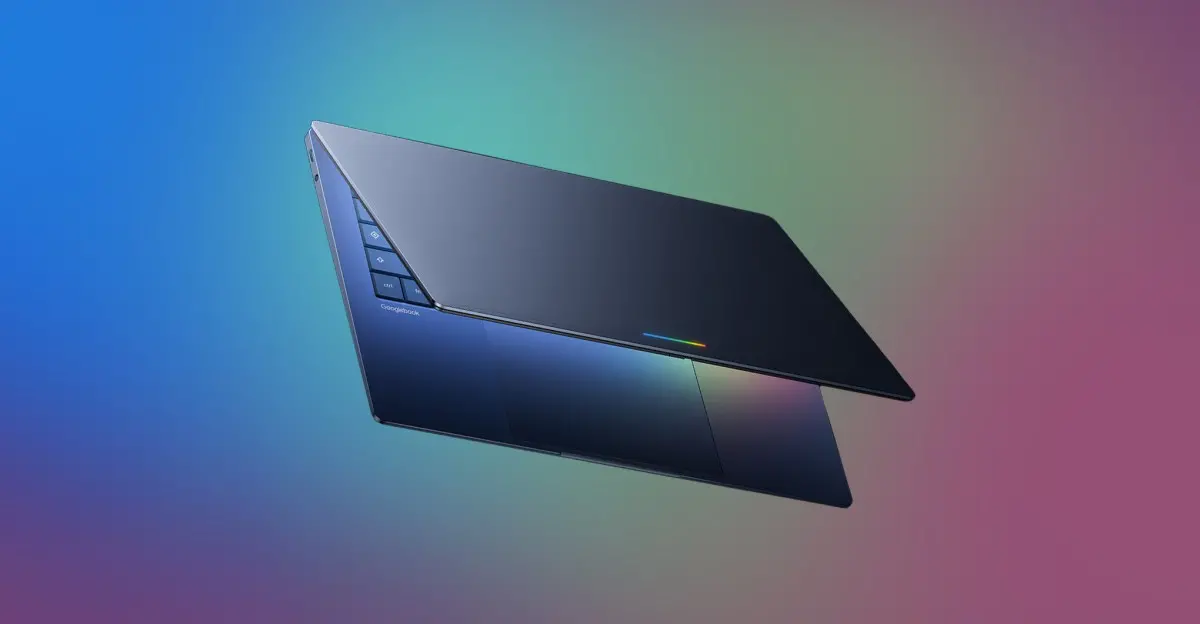
Google announced its new Googlebook laptop platform yesterday, leaving many observers questioning its purpose. After nearly 15 years of Chromebooks, the company is blowing up its successful formula for something that, at first glance, looks strikingly similar. The Googlebook runs on an operating system built on the Android stack, integrating Gemini AI deeply into the user experience. But with no hardware details, no clear target audience, and a market already dominated by MacBooks and Windows laptops, the question remains: why does the Googlebook exist?
The Chromebook Legacy
When Chromebooks first launched in 2011, they addressed a clear need. They offered a lightweight, secure operating system that ran on inexpensive hardware, making them ideal for education and budget-conscious consumers. The Chrome browser was the centerpiece, and for many users, a web browser covered all essential tasks—email, documents, browsing, and streaming. Chromebooks quickly dominated classrooms, providing affordable computing for students. Over the years, ChromeOS added Android app support, Linux capabilities, and improved performance, but its core value proposition remained simplicity and low cost.
However, the competitive landscape has shifted dramatically. MacBooks have undergone a revolution with Apple's M-series chips, offering exceptional performance and battery life at various price points. The MacBook Neo, launched at around $600, directly targets the same budget segment that Chromebooks once owned. Windows on Arm has matured, providing efficient processors from Qualcomm, while x86 Windows laptops from Intel and AMD offer impressive performance and battery life. Chromebooks, once a unique alternative, now face stiff competition from devices that run full desktop operating systems with broader software compatibility.
What the Googlebook Promises
The Googlebook announcement was notably sparse on details. No specific hardware specs, no pricing information, and no clear launch timeline. What we did see was an emphasis on Gemini AI integration, including AI-generated widgets, seamless file sharing with Android phones, and a new cursor feature that invokes Gemini. The operating system appears to be a refined version of Android scaled for desktop use, similar to the long-rumored Aluminium OS that was supposed to unify ChromeOS and Android.
The idea of a unified OS is not new. For years, rumors suggested that Google was working on merging ChromeOS and Android into a single platform. The benefit would be a consistent ecosystem across phones, tablets, and laptops, with Android apps running natively on the desktop. However, the Googlebook seems to be a step in that direction, but without the revolutionary features that were expected. Instead, we get an awkwardly named line of laptops with a glowing light bar and a heavy dose of AI.
AI Integration: Solution or Gimmick?
Google is betting big on Gemini, but the demos shown so far—creating images from other pictures, generating widgets, casting apps—feel like features that could have been implemented as apps on existing ChromeOS or Android devices. Chromebooks already have a Gemni-powered key that replaced Caps Lock in 2024. The new cursor integration, while novel, does not fundamentally change how we interact with a laptop. Critics have already dubbed the device the "Google Slopbook," reflecting skepticism about the value of forced AI features.
The broader trend of AI integration in operating systems has been met with mixed reactions. Microsoft's Copilot integration in Windows 11 has drawn backlash for cluttering the user interface with unnecessary AI suggestions. Apple's Liquid Glass era on macOS has its own set of controversies. Google is now entering this arena with a similar approach, but without demonstrating clear use cases that justify abandoning the Chromebook model.
The Competitive Reality
Today's laptop market offers excellent choices at various price points. For $600, a MacBook Neo provides access to Apple's ecosystem, excellent performance, and a long battery life. For a bit more, a MacBook Air or a premium Windows laptop from Dell, Lenovo, or HP delivers outstanding performance for creative work, gaming, and productivity. Windows laptops, in particular, offer unparalleled compatibility with software and games, a key advantage over any ChromeOS or Android-based system.
Googlebooks will run Android apps, which are designed primarily for mobile touchscreens. Scaling them to a desktop environment with mouse and keyboard has historically been clunky. While Android apps on Chromebooks have improved over the years, they still lag behind native desktop applications. The Googlebook faces the same constraint: it must adapt a mobile ecosystem to a desktop form factor, while its competitors run full desktop operating systems with decades of software maturity.
What Problem Is Google Solving?
When Chromebooks launched, they solved real problems: high cost, security vulnerabilities, and complexity. The Googlebook, on the other hand, seems to create new problems for consumers and developers alike. Existing Chromebook users face an uncertain future as Google shifts focus. The new OS may not support existing ChromeOS apps or workflows, potentially breaking compatibility. For new buyers, the value proposition is unclear: why choose a Googlebook over a MacBook, Windows laptop, or even a tablet?
Google's presentation focused heavily on Gemini and phone integration, but these are features that could have been added to ChromeOS through updates. The decision to launch an entirely new platform suggests that Google believes the underlying architecture of ChromeOS is insufficient for its AI ambitions. However, from the user's perspective, the changes appear incremental. The OS looks similar, the apps are similar, and the hardware—aside from the glowing light bar—is similar to existing Chromebooks.
The Missing Details
At the announcement, Google provided no details about minimum hardware specifications, chipset partners (beyond a vague acknowledgment from Intel), or pricing. The company did not explain how the Googlebook will be positioned against the MacBook Neo or budget Windows laptops. There was no discussion of battery life, display quality, or build materials. Instead, the focus was on AI features that, while interesting, do not address the fundamental question of why someone would buy this device.
The Googlebook also raises questions about software availability. Will it run existing Chrome extensions? Can it replace a Chromebook in education settings? Will developers need to optimize their apps for a new screen size and input method? These are critical considerations that Google has yet to address. The lack of concrete information suggests that the Googlebook may still be in early development, with a launch that is more of a vision statement than a product release.
Looking Ahead
Google has to show that the Googlebook offers something unique. The company has a history of launching platforms that struggle to gain traction—Google Glass, Google+, Nexus Q, and Stadia are just a few examples. The ChromeOS ecosystem, by contrast, has been a steady success, especially in education. Abandoning it for a new platform without a clear differentiator is a risky move. The Googlebook must prove that it can deliver a better experience than the Chromebooks it replaces, and that it can compete with the MacBook and Windows ecosystems.
Until Google provides real hardware, real pricing, and real use cases, the Googlebook remains a curiosity—a product without a clear purpose in a market that already has excellent options. The burden is on Google to explain why this new platform is necessary, and why consumers should care. So far, the answer to "Why does the Googlebook exist?" is elusive.
Source: The Verge News