

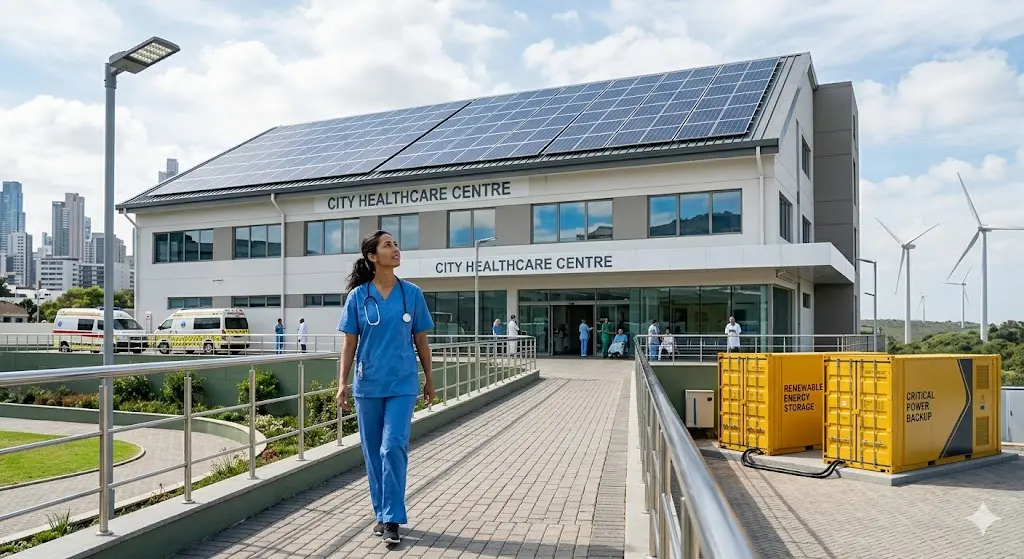
Renewable energy is no longer just an environmental discussion. Hospitals, pharmaceutical companies, and healthcare systems now see energy reliability, rising electricity costs, and carbon emissions as direct threats to patient care and long-term operations. That’s why conversations around clean power in healthcare are appearing across policy debates, media coverage, and global research reports.
Healthcare facilities depend on stable energy every second of the day. Research shows renewable energy adoption in hospitals can reduce operational costs, improve emergency resilience, and lower pollution-related health risks. At the same time, concerns about infrastructure costs, technology reliability, and uneven global access continue to drive debate worldwide.
Why Renewable Energy Is a Growing Concern in Healthcare Worldwide has become one of the most discussed healthcare topics in recent years. Hospitals consume massive amounts of electricity, and many health systems are struggling with rising energy expenses, climate-related disruptions, and stricter sustainability expectations. Here’s the thing — patients rarely think about where hospital power comes from until something goes wrong.
In my experience, healthcare leaders are starting to realize energy policy is no longer separate from patient outcomes. A power outage during surgery or vaccine storage failure can become a public health crisis within minutes. That’s partly why renewable infrastructure is moving from “nice to have” to something healthcare executives genuinely worry about.
What Is Renewable Energy in Healthcare?
Renewable Energy in Healthcare: The use of sustainable power sources such as solar, wind, hydro, or geothermal energy to support hospitals, clinics, laboratories, and healthcare operations.
Healthcare systems use enormous amounts of energy every day. Emergency rooms never close. MRI machines run constantly. Cold-chain storage for medicines requires uninterrupted refrigeration. Even small clinics depend heavily on stable electricity.
Renewable energy in healthcare refers to integrating cleaner energy sources into these operations. Some hospitals install rooftop solar systems. Others purchase renewable electricity from large-scale providers. A few are even building microgrids that allow facilities to remain operational during disasters.
What most people overlook is that healthcare pollution itself contributes to illness. Research from organizations like the World Health Organization and international climate-health studies continues to connect fossil fuel pollution with respiratory diseases, cardiovascular conditions, and heat-related illnesses. That creates a strange cycle where healthcare systems treat problems partially linked to energy systems they still rely on.
Why Renewable Energy Matters in 2026
2026 is shaping up to be a turning point for healthcare energy policy. Rising global temperatures, unstable energy markets, and aging power infrastructure are putting hospitals under pressure in ways we probably underestimated a decade ago.
Energy costs are hitting healthcare budgets hard. Large hospitals spend millions annually on electricity alone. When fuel prices spike or power grids fail, healthcare operations become vulnerable very quickly.
You’re also seeing more governments push sustainability targets for public health facilities. In Europe, parts of Asia, and North America, hospitals are under growing pressure to reduce emissions while maintaining around-the-clock reliability.
Let me be direct. Healthcare doesn’t have the luxury of downtime.
A shopping mall can close for a few hours during a blackout. A trauma center can’t.
That difference changes the entire renewable energy conversation.
Expert Tip
Hospitals investing in hybrid systems instead of fully replacing traditional power sources often see smoother transitions. In most cases, combining renewable backup power with conventional systems reduces operational risk during early adoption stages.
Why Are Hospitals Worried About Energy Security?
Energy security might sound like an engineering issue, but it’s quickly becoming a healthcare concern.
Modern healthcare depends on continuous power for:
Intensive care units
Ventilator systems
Surgical equipment
Digital patient records
Pharmaceutical refrigeration
Emergency communications
One severe weather event can disrupt entire healthcare regions. Hurricanes, floods, wildfires, and heatwaves have already exposed weaknesses in power infrastructure worldwide.
I remember reading about a hospital network that lost cooling systems during a heat emergency. Staff had to relocate vulnerable patients while simultaneously dealing with a surge in admissions caused by extreme temperatures. Honestly, that situation probably scared healthcare planners more than public reports admitted.
Renewable energy systems with local battery storage are increasingly viewed as resilience tools rather than just environmental upgrades.
That shift matters.
How to Build Renewable Energy Strategies for Healthcare Facilities
Healthcare organizations are approaching renewable energy more strategically now. It’s not just about installing solar panels anymore.
1. Assess Energy Consumption
Hospitals first need detailed energy audits. Many facilities don’t actually know which departments consume the most electricity until they study the data carefully.
Imaging equipment, HVAC systems, and laboratory operations often account for major consumption spikes.
2. Identify Reliable Renewable Sources
Different regions require different solutions. Solar power works well in high-sunlight areas, while wind energy may perform better elsewhere.
Some facilities combine multiple renewable sources to avoid overdependence on one system.
3. Invest in Battery Storage
Here’s where things get interesting.
Renewable energy without storage can become unreliable during emergencies. Battery systems help maintain stable operations when weather conditions change or grids fail.
4. Modernize Infrastructure
Older healthcare buildings were never designed for renewable integration. Electrical systems, backup generators, and energy management platforms often need upgrades first.
That’s expensive. Sometimes painfully expensive.
5. Train Staff and Emergency Teams
Technology alone isn’t enough. Staff need operational training for energy emergencies and backup procedures.
What most guides miss is that human preparation matters as much as infrastructure investment.
6. Monitor Long-Term Performance
Hospitals increasingly use smart energy monitoring systems to track efficiency, downtime risk, and cost savings over time.
That data helps justify future investment decisions.
Common Mistake: Assuming Renewable Energy Automatically Cuts Costs
A lot of people assume renewable healthcare systems instantly reduce expenses.
That’s not always true.
Initial infrastructure investment can be massive. Smaller hospitals especially may struggle with financing. Maintenance, battery replacement, and system upgrades also create long-term costs many organizations underestimate.
Ironically, some facilities save money faster by improving energy efficiency first rather than rushing into large renewable projects immediately.
That’s a slightly unpopular opinion, but I think it’s accurate.
How Climate Change Is Reshaping Healthcare Energy Priorities
Climate-related health emergencies are changing how healthcare leaders think about energy systems.
Heatwaves increase hospital admissions. Wildfires worsen respiratory illnesses. Floods disrupt emergency services. Disease patterns are shifting in several regions.
Healthcare systems are responding by reevaluating infrastructure resilience.
Some hospitals now build energy-independent emergency wings capable of operating during extended grid failures. Others are redesigning campuses around lower emissions and reduced water usage.
A fascinating trend is the rise of “green hospitals.” These facilities integrate sustainable construction materials, renewable energy systems, efficient cooling technologies, and digital monitoring platforms.
Not every project succeeds, though.
In some cases, healthcare organizations adopted sustainability plans mainly for public image without fully understanding operational realities. Those projects often struggle financially or technically after launch.
Expert Tip
Healthcare executives who involve engineers, clinicians, and emergency planners together during renewable planning usually avoid costly design mistakes. Cross-department coordination saves more money than most people expect.
What Does Research Say About Public Opinion?
Global audience research shows people increasingly expect healthcare systems to become environmentally responsible.
Patients now associate cleaner healthcare infrastructure with:
Better public health standards
Safer environments
Improved long-term care quality
Modernized healthcare delivery
Younger audiences especially support sustainability initiatives in hospitals. Many consumers also believe healthcare organizations should lead climate action because of their role in protecting public well-being.
Still, skepticism exists.
Some communities worry renewable transitions could increase healthcare costs or divert funding from patient care. Others question whether renewable systems are reliable enough during emergencies.
Both concerns are understandable.
Healthcare leaders basically face a balancing act between sustainability, affordability, and operational stability.
Expert Tips and What Actually Works
In my experience, renewable healthcare projects work best when organizations move gradually instead of treating sustainability as a PR campaign.
Start with efficiency improvements first. Upgrade outdated cooling systems. Improve insulation. Reduce unnecessary energy waste. Then expand into larger renewable systems once infrastructure is stable.
Here’s another thing people rarely mention: healthcare workers need to trust the systems.
If doctors or emergency teams believe renewable infrastructure could fail during critical procedures, internal resistance grows fast. Strong testing protocols and backup systems matter just as much as environmental goals.
A realistic example comes from regional hospitals using solar-powered refrigeration for vaccine storage in areas with unstable electricity grids. Those systems often improve healthcare reliability dramatically because they solve a direct operational problem instead of chasing headlines.
That’s usually where renewable adoption succeeds most.
People Most Asked About Why Renewable Energy Is a Growing Concern in Healthcare Worldwide
Why do hospitals use so much energy?
Hospitals operate nonstop and rely on advanced medical equipment, climate control systems, and emergency infrastructure. Energy demand stays high 24 hours a day because patient care can’t pause.
Can renewable energy fully power hospitals?
Some smaller facilities can operate largely on renewable systems, but major hospitals usually still require hybrid infrastructure and backup generators. Reliability remains the top concern.
Does renewable energy reduce healthcare costs?
Over time, it can lower operational expenses. However, upfront infrastructure costs are often significant, especially for older healthcare facilities needing major upgrades.
Why is climate change affecting healthcare systems?
Climate-related disasters increase patient demand, damage infrastructure, and create new health risks. Healthcare organizations must prepare for more extreme conditions and energy disruptions.
Are patients concerned about hospital sustainability?
Yes, especially younger populations. Many people now expect healthcare providers to reduce environmental impact while maintaining quality patient care.
What renewable sources are most common in healthcare?
Solar energy is currently the most widely adopted option. Some regions also use wind power, geothermal systems, and battery-supported microgrids.
Could renewable systems fail during emergencies?
They can if poorly designed. That’s why hospitals usually combine renewable infrastructure with backup storage and traditional emergency generators.
Is renewable healthcare only for wealthy countries?
Not necessarily. In some developing regions, solar-powered clinics actually improve healthcare access because they provide electricity in areas with unstable grids.
Renewable energy is becoming a growing concern in healthcare worldwide because energy systems now directly affect patient safety, healthcare costs, infrastructure resilience, and public health outcomes. Hospitals aren’t just discussing sustainability anymore — they’re trying to figure out how to stay operational in an increasingly unpredictable world.
Healthcare leaders who balance resilience, affordability, and environmental responsibility will probably shape the next generation of global medical infrastructure.
Businesses aiming to improve brand visibility and organic traffic can combine online press release distribution with trusted SEO services to gain high authority backlinks, stronger media coverage, and faster SEO ranking growth. These platforms help startups, agencies, and bloggers achieve instant publishing exposure while building long-term digital authority through targeted PR distribution services and performance-focused marketing strategies.