

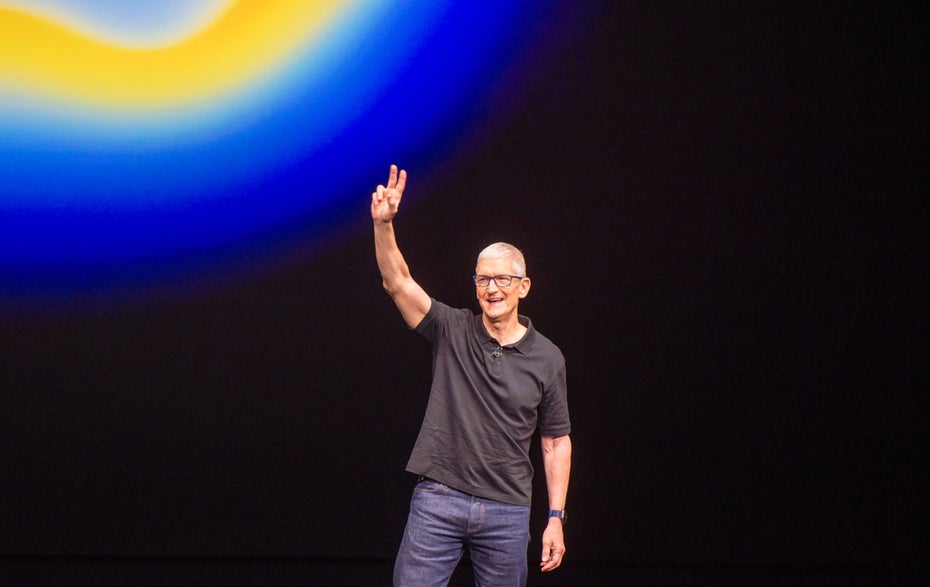
After more than 14 years at the helm, Tim Cook is set to step down as Apple's CEO. On September 1, 2026, John Ternus, the company's hardware chief, will assume the role. Under Cook's leadership, Apple became the first company to reach a market capitalization of one trillion dollars in 2018, and it remains one of the most valuable enterprises in the world. Yet Cook, known for his calm and analytical demeanor, never sought the spotlight.
Born in Alabama, Cook earned a degree in industrial engineering from Auburn University. His career began at IBM, where he spent twelve years specializing in supply chain management and just-in-time manufacturing. He then served as COO at Intelligent Electronics' reseller division and later moved to Compaq. It was at Compaq that headhunters first approached him about Apple, but he initially declined.
In 1998, Apple was on the verge of bankruptcy. Steve Jobs, who had recently returned to the company, was desperate to find someone to overhaul its chaotic supply chain. After a meeting with Jobs, Cook was won over. “Within five minutes of my first interview with Steve, I was ready to throw caution and logic to the wind and join Apple,” he later recalled. He became Senior Vice President of Worldwide Operations and immediately set to work: he slashed inventory, reduced the number of suppliers, outsourced manufacturing to partners like Foxconn, and streamlined logistics, saving the company hundreds of millions of dollars annually.
From Operations to CEO-in-Waiting
Cook's operational expertise quickly made him indispensable. In 2005, Jobs appointed him COO—almost casually, during a meeting. When Jobs took medical leaves due to his battle with pancreatic cancer, Cook ran the company effectively. After Jobs' resignation and death in 2011, Cook became Apple's CEO. He delivered his first product launch on October 4, 2011: the iPhone 4S.
The early years of Cook's tenure were marked by skeptics questioning whether Apple could innovate without Jobs. The launch of Apple Maps in iOS 2 was a major embarrassment, forcing Cook to issue a rare public apology. But he soon silenced critics with the introduction of entirely new product categories: the Apple Watch in 2014 and the AirPods in 2016. Both faced initial ridicule but became market-defining successes. The Apple Watch now dominates the smartwatch market, while AirPods invented the truly wireless earbud segment.
The Vision Pro Gamble and AI Stumbles
Not every product under Cook succeeded. The Apple Vision Pro, a mixed-reality headset released in 2024, impressed tech reviewers but failed to gain traction due to its high price and limited use cases. The company also entered the artificial intelligence race late. Features such as AI-powered email summaries and writing assistants appeared in iOS, but a promised overhaul of Siri never materialized, leaving customers disappointed.
Cook also navigated immense geopolitical pressures. During Donald Trump's presidency, he worked hard to maintain good relations, even as Trump imposed tariffs on Chinese imports and pushed for more domestic manufacturing. In response, Apple announced a $500 billion investment in the United States and began producing the Mac Mini in a new Houston plant. Cook's attendance at a White House screening of a documentary about Melania Trump drew criticism, especially after an ICE shooting incident on the same day. Yet Cook also resisted Trump’s orders to dismantle diversity programs, backed by shareholder support.
Political Tightrope
Despite the backlash, Cook remained pragmatic. He understood that Apple’s supply chain depended heavily on China, and navigating trade wars required diplomacy. He also retained his own values: in 2014 he publicly came out as gay, becoming the first openly gay CEO of a Fortune 500 company. Throughout his tenure, he advocated for privacy as a fundamental human right, clashing with governments over encryption and data requests.
Under Cook's watch, Apple also expanded its services ecosystem—including the App Store, Apple Music, iCloud, Apple Pay, and Apple TV+—which now generates over $80 billion in annual revenue. The iPhone evolved through numerous generations, with larger screens, advanced cameras, and the transition to Apple’s own M-series chips for Macs, which cemented Apple’s independence from Intel.
A Legacy of Quiet Competence
Tim Cook’s leadership style was the antithesis of Steve Jobs’ fiery charisma. He was methodical, collaborative, and patient. He prioritized operational excellence over theatrical launches. He built a strong executive team, including John Ternus, the hardware chief who will succeed him. Cook will remain with Apple as chairman of the board, continuing to advise on political and regulatory matters.
At the upcoming WWDC in June 2026, Cook will deliver his final keynote as CEO, likely greeting the audience with his signature “Good Morning.” It will be a fitting farewell for a man who transformed Apple from a niche computer maker into a global cultural and technological powerhouse.
Source: t3n Magazin News