

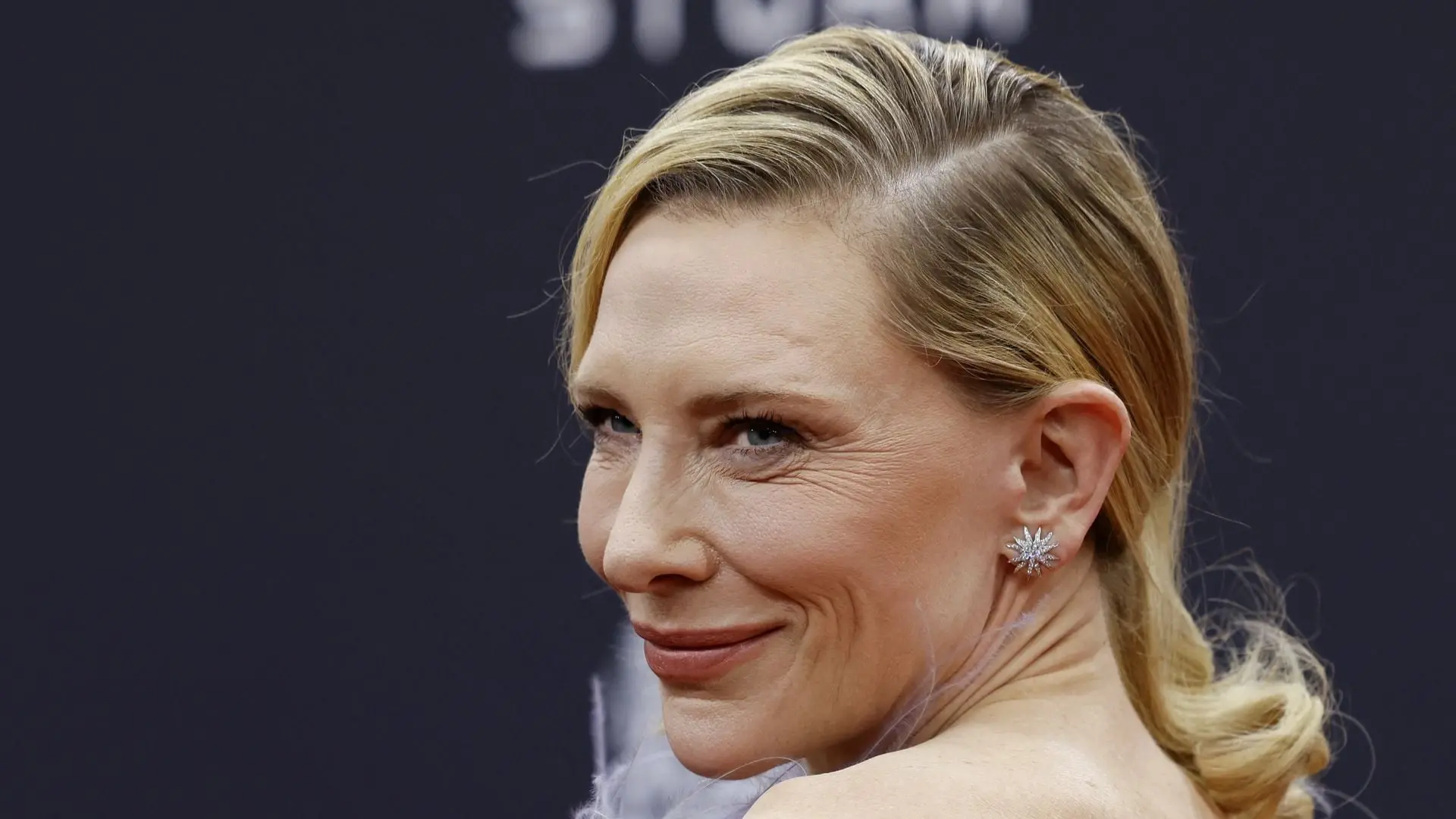
At the prestigious Cannes Film Festival, two-time Oscar winner Cate Blanchett opened up about a deeply personal and career-defining moment from the set of the 2006 film Babel. Speaking at the Rendez-vous event in the Bunuel Theatre, Blanchett recalled a blunt outburst from director Alejandro González Iñárritu that has stayed with her for nearly two decades.
The Incident: A Blunt Wake-Up Call
According to Blanchett, she and Brad Pitt were filming a crucial scene. After several takes, Iñárritu approached them and delivered a scathing critique. “Brad Pitt and I were filming a scene. We did a few takes, and then Alejandro came over and said, ‘This is sht.’ He added, ‘What is this? There is nothing here. This scene has to work, or the movie won’t work,’” Blanchett recounted. The frank assessment visibly shook the actress, who admitted, “It throws you off balance.”
Blanchett used the moment to reflect on the delicate balance of power on a film set. “Sometimes a director can lead with love, but with incredibly tough love. I think a lot about how we can create respectful spaces for each other that are still demanding – because when making a movie, we need to be rigorous, but also joyful,” she said.
The Context of Babel and Iñárritu’s Directorial Style
Babel is a multi-narrative drama exploring themes of communication and isolation across different continents. It starred an ensemble cast including Brad Pitt, Cate Blanchett, and Adriana Barraza. The film was nominated for seven Academy Awards, including Best Picture and Best Director for Iñárritu. The director, known for his intense and methodical approach, had previously won acclaim for Amores Perros and 21 Grams. His later films like Birdman and The Revenant cemented his reputation as a filmmaker who pushes actors to their limits. Iñárritu himself has spoken about using fear and pressure as tools to extract authentic performances. However, Blanchett’s story suggests that even seasoned professionals can find such methods jarring.
Blanchett’s Career and the Rigorous Demands of Hollywood
Cate Blanchett is one of the most respected actresses of her generation, with a career spanning over three decades. She has won two Academy Awards – for her supporting role in The Aviator (2005) and her leading role in Blue Jasmine (2014) – along with numerous BAFTAs and Golden Globes. Her filmography includes collaborations with directors like Steven Soderbergh, David Fincher, and Guillermo del Toro. Blanchett is known for her chameleon-like ability to transform into diverse characters – from Queen Elizabeth I to a middle-aged man in Manifesto.
Yet, even with her vast experience, the encounter with Iñárritu left a mark. Her willingness to share this story reflects a broader conversation in Hollywood about director-actor relationships. In recent years, many actors have called for more respectful and collaborative sets, contrasting with the “auteur” style that once dominated. Blanchett’s comment – that rigorous work can coexist with joy – serves as a moderate stance in this debate.
Aging, Physical Limits, and Losing Talents
During the same Cannes discussion, Blanchett also addressed the realities of aging in the entertainment industry. “As you get older, the palette you play on perhaps becomes more calcified, less malleable,” she said. She cited a concrete example: tap dancing. “I used to be able to tap dance easily. Now I can barely do it anymore. The sad thing is that I have a talent for learning things quickly, but then I get a kind of physical dementia and forget it,” she explained.
This admission resonates with many performers who must confront the physical decline that comes with age. For Blanchett, however, it is not just about physical ability but also about the emotional and creative reserves that dwindling energy can affect. She continues to act and produce at a high level, recently appearing in Tár (2022), for which she received an Oscar nomination, and The Crown (2022-2023) as Princess Diana’s voice coach. Her candidness about aging adds a human dimension to her public persona.
Comparative Incidents: Tough Love or Overstepping?
Blanchett’s anecdote is not isolated. Many actors have shared stories of demanding directors. For instance, Stanley Kubrick was known for running dozens of takes, often pushing actors to exhaustion. David O. Russell’s heated outbursts on set have been documented, with actors like Lily Tomlin and George Clooney speaking about his methods. Conversely, directors like Nora Ephron or Alfonso Cuarón are often described as being more collaborative and gentle. The film industry remains divided on whether aggressive direction yields superior performances. Iñárritu himself has defended his style, arguing that acting is not a comfortable profession. Blanchett’s account, however, suggests that even when such tough love comes from a place of commitment to the film, it can still be disconcerting for the actor.
Supporting Roles and the Ensemble in Babel
Beyond the incident with Blanchett and Pitt, Babel featured an intricate series of interlocking stories. One narrative followed a Moroccan goatherd and his sons, another a deaf-mute Japanese teenager, and yet another a nanny in California. The film’s success depended on the ensemble’s ability to convey raw emotion without dialogue-heavy scenes in some cases. Iñárritu’s insistence on perfectionism likely stemmed from the need for each segment to feel authentic. The scene Blanchett referred to was the pivotal moment when her character is shot in the desert, a moment of crisis that sets one of the storylines in motion. The pressure on that scene was immense, and Iñárritu’s bluntness may have been a calculated attempt to jolt the actors into a higher gear. Whether it was effective is a matter of personal perspective, but the film’s critical acclaim suggests that, in the end, the results spoke for themselves.
Industry Impact and Ongoing Debates
The Cannes revelation has reignited discussions about set etiquette and the boundaries of creative direction. Social media reaction was polarized: some praised Iñárritu for his honesty and commitment to quality, while others criticized him for crossing a line into disrespect. Blanchett’s own reflection offers a nuanced view: she neither condemns nor fully endorses the approach, instead promoting a middle ground where high standards are maintained through respect and joy. This mirrors a larger shift in the film industry, where buzzwords like “safe space” and “psychological safety” have become common, especially after the MeToo movement highlighted abuses of power. Directors now often work with intimacy coordinators and script supervisors trained in maintaining respectful environments. However, the balance between creative freedom and actor comfort remains delicate.
Blanchett’s story serves as a case study in this evolving dynamic. It also highlights the importance of communication on set. Iñárritu could have chosen different words to convey his disappointment; his choice of “sht” was stark. Yet Blanchett used the memory constructively, prompting her to think about how to foster demanding yet supportive creative spaces. As she continues to direct and produce through her company Dirty Films, she likely implements these lessons in her own projects.
The incident also underscores the vulnerability of even the most acclaimed actors. Blanchett is not a newcomer; she was already an Oscar winner when she filmed Babel. Yet a director’s harsh critique can still unsettle her. This humanizes the often-glamorized world of A-list filmmaking and invites audiences to consider the complex relationships behind their favorite movies.
In the end, Blanchett’s candidness at Cannes provides a rare glimpse into the high-pressure atmosphere of a major film set. Her willingness to discuss both the pain and the lessons learned offers valuable insight for aspiring filmmakers and actors alike. As the industry continues to evolve, stories like this help shape a more empathetic yet uncompromising standard of excellence.
Source: Promiflash.de News