

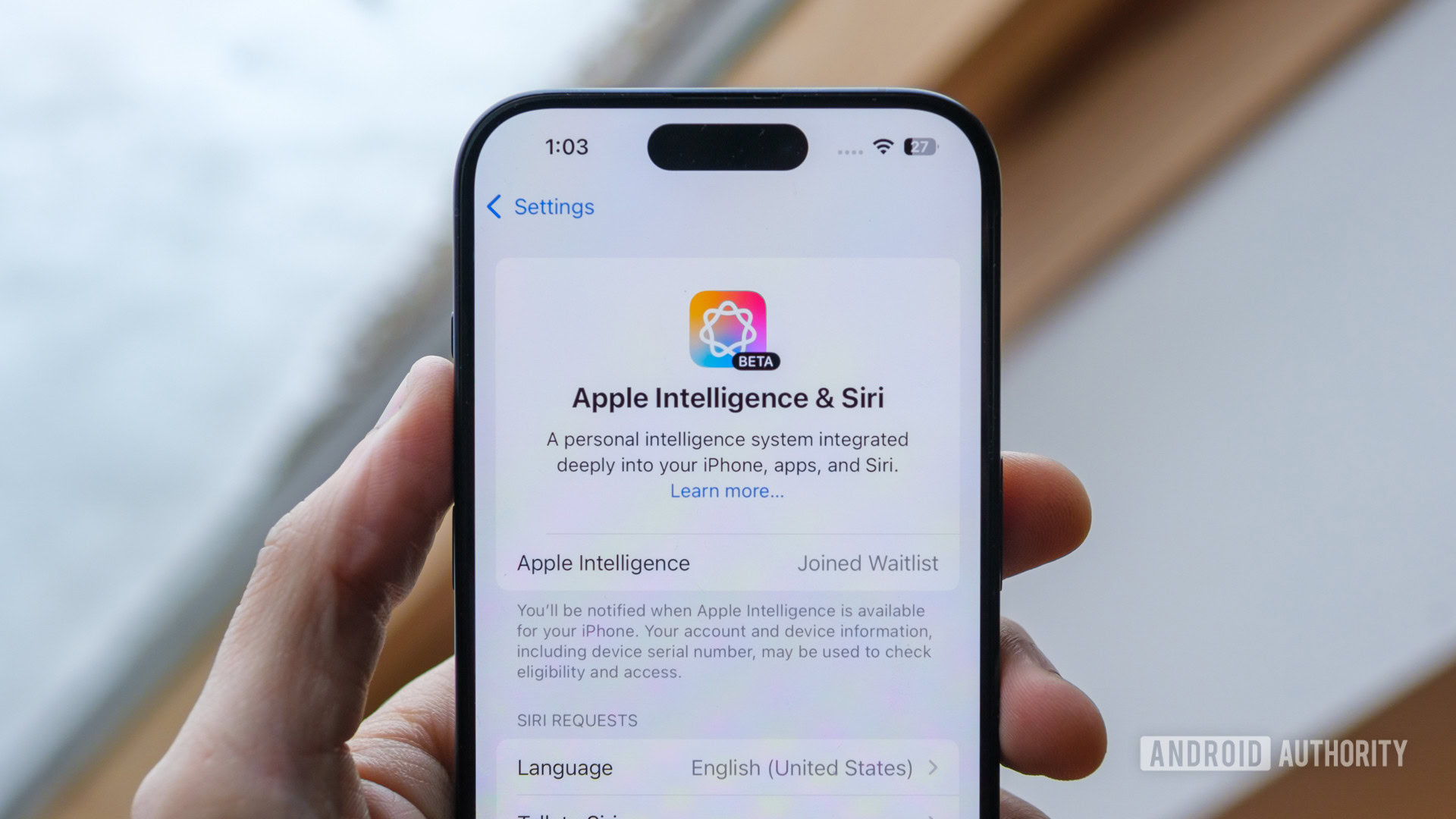
iOS 27 is shaping up to be one of the most significant software updates in Apple's history, with a complete redesign of Siri at its core. According to recent reports, the new assistant will leverage Google's Gemini AI to offer far more advanced capabilities than ever before. This marks a strategic shift for Apple, which has traditionally relied on its own in-house AI technologies.
A Redesigned Siri
The most visible change is Siri's new look. Instead of the glowing orb that appears at the bottom of the screen, Siri will now emerge from the Dynamic Island. This makes the assistant feel more integrated into the iPhone's hardware design, especially on models like the iPhone 15 Pro and iPhone 16 series.
Users will also gain a new gesture: swiping down from the top center of the display will open a typing interface where they can enter queries manually. This interface will also display Siri Suggestions, such as frequently used apps and functions, streamlining quick access.
One of the biggest upgrades is Siri's ability to understand and act on on-device content. For example, you'll be able to ask Siri to check your calendar for free time slots or overlapping events—tasks that were previously difficult or impossible to perform without manual scrolling. This is made possible by on-device machine learning and, crucially, integration with Gemini, Google's large language model.
Additionally, Siri will support third-party AI agents. A new button inside the Siri interface will let users switch between different AI agents installed on their iPhone. This opens the door for developers to build custom AI assistants that can tap into Siri's infrastructure.
Camera App Gets Smarter
The camera app is receiving a major overhaul. A dedicated Siri mode will replace the existing Visual Intelligence tool, which was previously accessed via the Camera Control button. This mode will allow users to point their camera at objects and get real-time AI analysis, such as identifying landmarks, translating text, or retrieving product information.
Apple is also making the camera interface more customizable. Users can rearrange, replace, or remove shortcuts from the top bar—a feature inspired by the flexibility of certain Android camera apps. This will let photographers tailor the camera to their workflow, whether they shoot in ProRAW, Portrait, or Cinematic mode.
Apple Intelligence Gets a Boost
Apple's broader AI initiative, called Apple Intelligence, is expanding with iOS 27. Key additions include:
- Reframe: This AI tool lets users change the perspective of a photo after it's been taken. For instance, you could adjust the angle of a landscape shot to make a building appear straight instead of leaning.
- Extend: This feature expands images beyond their original boundaries, generating plausible new content—like extending a sky or adding more foreground to a portrait.
- Grammar Checker: A built-in tool that works across the system, providing grammar and spelling corrections in any text field, similar to Grammarly but integrated natively.
- AI Wallpapers: Users can create custom wallpapers using AI prompts, generating unique patterns, landscapes, or abstract art.
- Revamped Image Playground: Apple's AI image generation tool gets new capabilities, likely including text-to-image generation based on descriptions.
Shortcuts Becomes Truly Intelligent
The Shortcuts app, already a powerful automation tool, will now support natural language commands. Instead of manually configuring complex automations, users can simply say or type something like "Create a shortcut that sends my location to my wife every evening at 6 PM" and the system will build it automatically. This lowers the barrier for non-technical users to leverage automation.
Historical Context: Apple's AI Journey
Apple's decision to partner with Gemini is notable. The company has long prioritized user privacy and on-device processing, which limited its AI capabilities compared to cloud-based rivals like Google and OpenAI. By integrating Gemini, Apple can offer advanced features while still handling sensitive data locally where possible, with Gemini powering more complex cloud-based queries.
This is not the first time Apple has turned to a third party for core AI: Siri originally used Google search results, and Apple Maps relied on third-party data. However, the depth of Gemini integration suggests a broader strategic alliance that could benefit both companies.
Impact on Users
For iPhone owners, iOS 27 promises to close the AI gap with Android competitors. Google's Pixel phones have long offered features like Magic Eraser, Live Caption, and advanced Assistant integration. Samsung's Galaxy AI suite also provides on-device translation, photo editing, and productivity tools. With the new Siri and Apple Intelligence tools, iOS users will finally have comparable capabilities.
However, some questions remain about privacy. Apple has emphasized that Siri's new capabilities will be opt-in, and that users can choose which AI agents to trust. The company will need to maintain its reputation for privacy as it leans on external AI infrastructure.
The official unveiling is expected at WWDC on June 8, 2026. Alongside iOS 27, Apple will likely preview iPadOS 27, macOS 16, watchOS 12, and visionOS 3. Developers and enthusiasts can expect beta releases shortly after the keynote, with a public rollout in September alongside new iPhone models.
Source: Android Authority News