

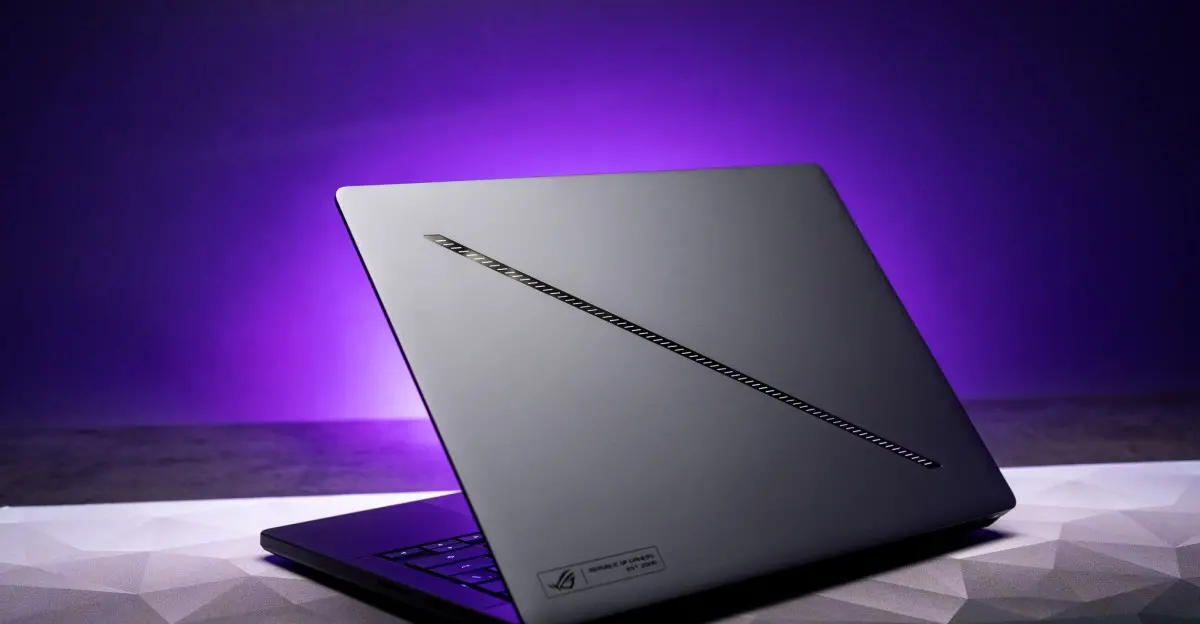
The Asus ROG Zephyrus G14 has been a fan favorite since its debut in 2020, offering a rare blend of portability and gaming power. The 2026 model, now powered by Intel's Panther Lake processors, continues that tradition but at a significantly higher price point that may test loyalty.
For years, the G14 was the go-to recommendation for anyone who wanted a single laptop that could handle both demanding creative work and modern AAA games without sacrificing mobility. The first-gen version launched at around $1,000, with high-end configurations climbing to about $2,500. The 2025 AMD model remained competitive at $2,299.99 for a well-equipped unit. But the 2026 refresh starts at $3,450, and the reviewed configuration — with an Intel Core Ultra 9 386H, RTX 5070 Ti, 32GB of RAM, and a 1TB SSD — costs $3,599.99. That's a $1,000 premium over last year's nearly identical AMD model.
What drives this increase? A combination of Intel's new high-end chip, the global memory shortage (often called RAMageddon due to AI data center demand), and generally rising component costs. The result is a laptop that is technically excellent but financially challenging.
Design and Build
The 2026 Zephyrus G14 retains the sleek, all-metal chassis introduced with the 2024 redesign. It measures 12.24 x 8.66 x 0.63-0.72 inches and weighs 3.48 pounds — essentially the same footprint as a 14-inch MacBook Pro. The lid features an updated slash lighting effect with more LED segments, and the bottom vents switch from rectangular slots to circular holes, which looks more premium.
The keyboard remains one of the best in the Windows laptop space. Key travel is deep and satisfying, second only to Lenovo ThinkPad keyboards in tactile feel. The mechanical trackpad is large and provides a firm click, even if it doesn't register presses in all four corners (a feature now found on budget Macs). Most gamers will use a mouse anyway, so this is a minor point.
Port selection is generous: two USB-C ports (one Thunderbolt 4, one USB-C 3.2 Gen 2), two USB-A 3.2 Gen 2, HDMI 2.1, a full-size SDXC UHS-II card slot, and a 3.5mm audio jack. The inclusion of a full-size SD slot is a first for the G14 line and a welcome addition for photographers and videographers who previously had to use adapters or microSD.
Display and Audio
The 14-inch OLED panel remains outstanding. It runs at 2880 x 1800 resolution with a 120Hz refresh rate, delivering deep blacks and vibrant colors. SDR brightness has been boosted to 500 nits (up from 400 nits on the 2025 model), and HDR peak brightness now reaches 1,100 nits — more than double last year's 500 nits. This makes the laptop usable in bright environments and stunning with HDR content.
Audio quality is equally impressive for a laptop of this size. Asus packs six speakers into the chassis — two tweeters and four woofers — producing rich, full sound with a noticeable stereo soundstage. In blind tests, many users could not distinguish it from a MacBook Pro's speakers.
Performance
The Intel Core Ultra 9 386H is a 16-core processor built on the Panther Lake architecture, paired with an Nvidia GeForce RTX 5070 Ti Laptop GPU. The system reaches a peak TGP of 130W, slightly higher than the 120W of last year's AMD model. That extra power translates into tangible gains in gaming and creative workloads.
In gaming, the G14 handles Battlefield 6 at 65-70 fps on native 2880x1800 with High settings without DLSS. Helldivers 2, which lacks DLSS support, still manages 80-90 fps. Marathon hovers near 70 fps with DLSS set to Quality. The keyboard deck stays fairly cool during extended sessions, though the underside gets warm. Fan noise in Performance mode is moderate; Turbo mode increases it noticeably but adds up to 10 fps via overclocking.
For creative work, the G14 feels snappy. Editing 50-megapixel RAW files in Adobe Lightroom Classic is smooth, with 100% previews loading quickly. The heavier lifting — applying edits across hundreds of images — slows down slightly, especially on battery power, but remains usable. The Panther Lake chip maintains good multicore and GPU performance even when unplugged, a notable improvement over previous Intel generations.
In benchmarks, the G14 scores 2,909 in Geekbench 6 single-core, 17,145 in multi-core, and 16,237 in OpenCL. Cinebench 2026 scores are 517 single and 4,645 multi. PugetBench for Photoshop hits 9,941, and Premiere Pro gets 10,378. These numbers put it slightly ahead of last year's AMD model in CPU-bound tasks, though the MacBook Pro M5 outperforms it in many CPU-centric applications.
Battery Life
The 73Wh battery delivers extraordinary endurance for a gaming laptop. In our battery rundown test — a mix of web browsing and video playback — the G14 lasted over 17 hours, compared to just 8.5 hours for the 2025 AMD model. In real-world use, I achieved just over 10 hours of mixed productivity (Chrome tabs, Slack, streaming music) at 80% screen brightness with Energy Saver disabled. Dipping into Energy Saver extends this further.
Gaming on battery obviously reduces run time, but even an hour of heavy Lightroom editing plus casual use stretched to about five to six hours total. This makes the G14 genuinely practical for all-day work without needing to hunt for an outlet — a rarity among Windows gaming laptops.
Price and Value
The elephant in the room is the price. $3,599.99 for the review unit is a tough pill to swallow. For comparison, last year's AMD G14 with the same GPU, RAM, and storage costs about $1,000 less. A 14-inch MacBook Pro M5 starts at $1,949 and a fully loaded M5 Max model matches the G14's price for far superior CPU performance, though it cannot game as well. You could buy a MacBook Pro plus a PlayStation 5 Pro or a Steam Deck and still have money left over.
Asus is keeping the 2025 AMD models in its lineup as a more affordable option, but there's no guarantee those prices won't rise. The 2026 G14 is undeniably a great laptop — it's the most complete single-device solution for work and gaming I've used. But the value proposition that made the Zephyrus line legendary is now heavily eroded by its premium pricing.
Final Verdict (No Conclusion)
The Asus ROG Zephyrus G14 (2026) is a near-perfect laptop for those who need a single machine for professional creative work and serious gaming. It offers excellent performance, a gorgeous OLED display, outstanding battery life, and thoughtful features like a full-size SD slot. However, its high starting price and the existence of significantly cheaper last-gen models make it a difficult recommendation for anyone on a budget.
Unless you absolutely need the incremental improvements in battery life, brightness, and connectivity — and have the budget to spare — the 2025 AMD version remains a smarter buy. The 2026 G14 is a demonstration of engineering excellence, but also a stark reminder of how much the cost of premium Windows hardware has risen in just a few years.
The laptop will serve its owner well for years, but the premium feels especially steep when the alternative is a MacBook Pro for creative tasks and a separate gaming device. For now, the G14 remains the best single-laptop solution on the market, but its price tag leaves a lingering question: is perfection worth the premium?
Source: The Verge News