

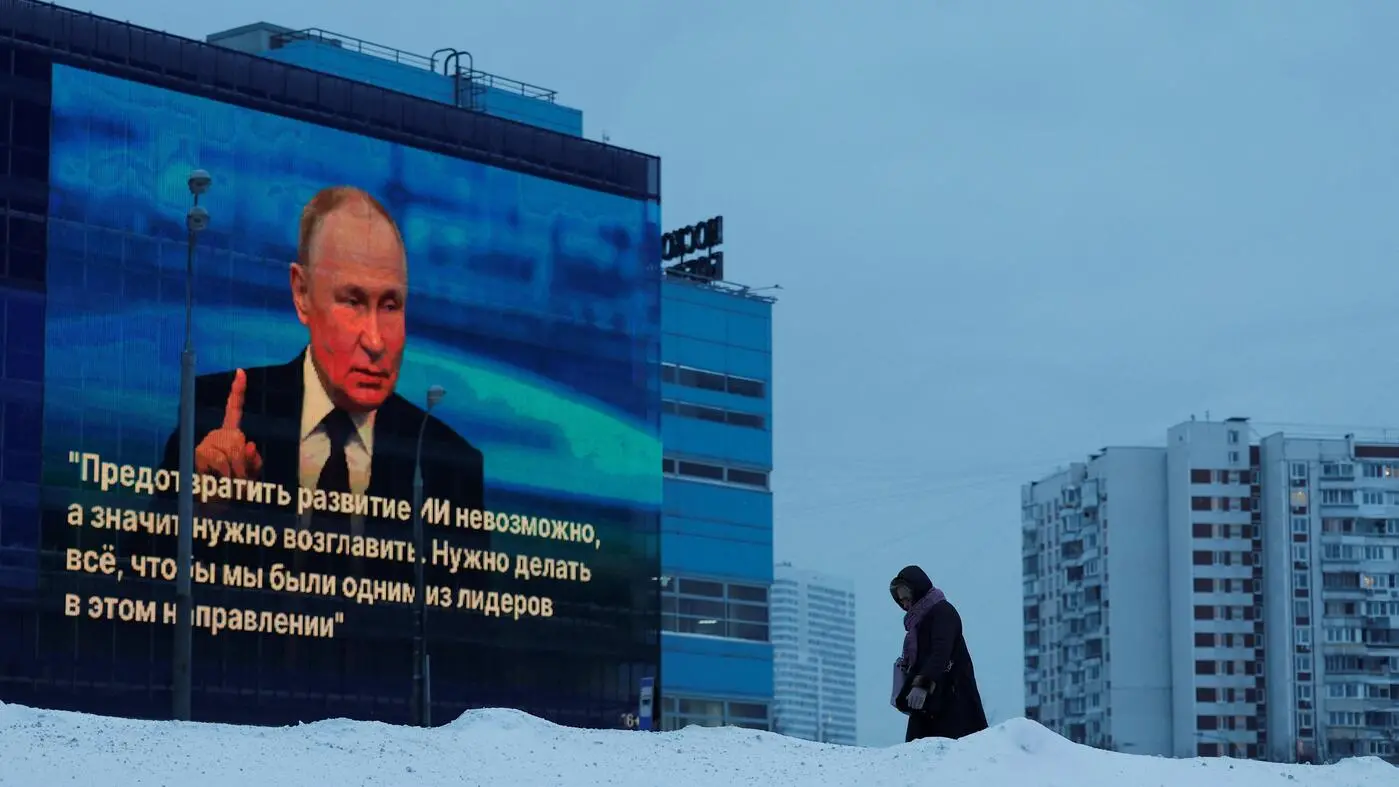
Putin's Approval Ratings Drop for Seven Weeks – State Pollsters Halt Data Publication
In an unusual move that has drawn international attention, the Russian state-run polling institute VTsIOM has temporarily suspended the publication of President Vladimir Putin's approval ratings after they declined for seven consecutive weeks. The last publicly released figure, on April 24, marked the end of a steady erosion of support for a leader who had previously enjoyed consistently high approval numbers, often above 80%. The decision to halt the data release has fueled speculation that the Kremlin is concerned about the political fallout from the downward trend, particularly as the war in Ukraine continues to strain the economy and society.
Since the full-scale invasion of Ukraine began in February 2022, Putin's popularity had initially surged in a classic 'rally around the flag' effect. However, as the conflict dragged on, with mounting casualties, Western sanctions, and economic hardship, the public's patience began to wear thin. By early 2023, polls started to show a gradual decline, and by 2024, the drop became more pronounced. The seven-week continuous slump observed by VTsIOM is the longest such streak since the start of the war and arguably since Putin's early years in power.
The decision to withhold the polling data is reminiscent of Soviet-era information control, where unfavorable statistics were simply not made public. It suggests that the Kremlin is aware of the fragility of the current political situation and is trying to prevent the negative trend from becoming a self-fulfilling prophecy. The move also indicates a growing nervousness among the ruling elite, who rely on Putin's public legitimacy to maintain their positions and privileges.
Historical Context: Putin's Popularity Over Two Decades
Vladimir Putin first became president in 2000, after a short stint as acting president following Boris Yeltsin's resignation. His early years were marked by high oil prices, economic growth, and a restoration of national pride after the chaos of the 1990s. Approval ratings soared above 70% and remained high through the 2008 financial crisis, thanks to a combination of controlled media, nationalist rhetoric, and targeted social spending. Even during the 2014 annexation of Crimea, approval ratings hit an all-time high of nearly 90%.
However, the Russian economy is heavily dependent on energy exports, and the 2014 oil price crash, along with Western sanctions, led to a prolonged stagnation. From 2015 to 2021, approval ratings fluctuated but generally remained above 60%. The COVID-19 pandemic saw a dip, but the launch of the Sputnik vaccine and aggressive propaganda helped stabilize numbers. The invasion of Ukraine initially boosted ratings, but the effect was temporary. By late 2023, independent polls suggested that trust in Putin had fallen to around 50% or lower in some regions, though state-controlled polls continued to show higher figures.
Broader historical patterns also play a role. In Soviet times, leaders like Stalin and Brezhnev enjoyed high official popularity until near their deaths, but the system eventually collapsed under the weight of economic inefficiency and disillusionment. While the current situation is different, the Kremlin's sensitivity to polling data echoes past regimes' fear of revealing weakness.
Possible Reasons for the Decline
Several factors contribute to Putin's sliding approval. The most significant is the ongoing war in Ukraine. Russian casualties have been estimated at over 200,000 killed or wounded, and the military has suffered major setbacks, including the loss of parts of Ukraine's territory that Russia claimed to have annexed. The mobilization of 300,000 reservists in September 2022 sparked protests and a flight of hundreds of thousands of men abroad. The war has also strained the budget, with defense spending consuming a growing share of GDP, leaving less for healthcare, education, and pensions.
Economic sanctions imposed by the West have damaged the Russian economy. While oil and gas revenues remained high initially, the imposition of price caps and reduced European dependence have taken a toll. Inflation has risen, the ruble has weakened, and many ordinary Russians face higher prices and a lower standard of living. The government's reliance on deficit spending and reserves is not sustainable indefinitely. A significant number of Russians, especially in urban areas, are feeling the squeeze.
Another factor is the lack of political alternatives. In a tightly controlled system, dissatisfaction cannot be expressed through elections. Instead, it shows up in apathy, low trust, or passive resistance. Rumors of infighting among the siloviki (security services) and factions supporting technocrats versus hardliners have been circulating. The death of Yevgeny Prigozhin in a plane crash in August 2023, after his abortive mutiny, highlighted the divisions. Some analysts believe that the steady decline in Putin's approval could embolden rival fractions to challenge his authority, either openly or through building parallel structures.
Impact on the Kremlin Power Apparatus
The title of the original article suggests that the drop in popularity might serve as a 'trigger for a fight within the power apparatus.' This is not far-fetched. In authoritarian regimes, the leader's perceived strength is crucial to maintaining elite cohesion. Once the leader appears weak, potential successors or faction leaders may start jockeying for position. The decision to halt polling publication is itself a sign of vulnerability. The Kremlin likely fears that if the decline continues, it could provoke a palace coup or a slow-motion erosion of control.
Historically, Putin has relied on a balance of power between different clans: the siloviki (former KGB and military), the civil bureaucracy (liberal economists), and the business oligarchs. Over the years, he has managed to keep them in check. However, the war has empowered the siloviki, while the economic technocrats have lost influence. If the public mood turns decisively against the war, the siloviki may turn on each other or on Putin to preserve their interests. Alternatively, the civil bureaucracy might see an opportunity to advocate for a change in course or a leadership transition.
The state's propaganda machine, including major TV channels, continues to portray Putin as a strong leader. But the fact that they cannot hide the worsening economy as effectively suggests that the information space is becoming harder to control. The internet, though heavily censored, still provides alternative sources, and independent journalists inside Russia have reported growing discontent. Some polls conducted by the independent Levada Center from Russia (which is not allowed to publish national figures directly) have shown approval ratings for Putin falling to around 40% in some categories since early 2024.
International factors also play a role. The financial and military support for Ukraine from the West has not wavered significantly, and Russia's recent offensives have failed to produce a breakthrough. The upcoming U.S. presidential election could shift American policy, but for now, the prospect of a prolonged war is not going away. The Kremlin's ability to blame external enemies for all problems is wearing thin when the domestic consequences are palpable.
Broader Implications for Russia and the World
A power struggle in the Kremlin could have severe consequences for Russia and global security. If Putin is replaced by a more moderate leader, there might be a chance for peace negotiations and an end to the war in Ukraine. However, a more hardline nationalist could emerge, advocating for total mobilization or even the use of nuclear weapons to change the course of the war. The uncertainty itself destabilizes the region.
Economically, a leadership crisis could lead to capital flight, a drop in the ruble, and further isolation from global markets. Countries like China and India, which have maintained trade with Russia, might reassess their positions if the regime appears unstable. The war has already disrupted energy markets and global food supplies, and further instability would worsen these problems.
For the Russian people, a power struggle might bring more repression or chaos, but it could also open the door to new political possibilities. The average Russian is tired of the war and tired of high prices. However, the fear of open conflict and the lack of mobilized opposition constrain any immediate changes. The coming months will be crucial in determining whether the drop in Putin's approval is a temporary blip or the beginning of a systemic crisis.
What Happens Next?
The Kremlin's decision to pause polling data is a cautious move. They are likely waiting for a rebound that may or may not come. If the situation stabilizes or improves (e.g., a battlefield success or economic uptick), they might resume publication with better numbers. If not, they may continue to suppress the data while relying on other tools of control, such as tightening censorship, increasing propaganda, or introducing new repressive measures.
Another possibility is that the Kremlin will release manipulated figures later, showing an invented upward trend. This would be consistent with past practices in Soviet times, but it could backfire if independent sources contradict the official narrative. The public's trust in state institutions is already low in many areas, and more blatant manipulation could increase cynicism.
In the meantime, the international community watches closely. Intelligence agencies in the U.S. and Europe are likely assessing the potential for a change in Russian leadership. Diplomatic channels behind the scenes may be testing the waters with different factions. Any major shift in the Kremlin's balance of power would have direct implications for the war in Ukraine, NATO strategy, and global alliances.
The drop in Putin's popularity is not yet catastrophic, but it is historically significant. For the first time since the early 2000s, his approval rating has fallen below the threshold that the Kremlin considers safe. The fact that they are hiding the data shows they know it. The question is whether they can reverse the trend or whether the trend will reverse them. As the old saying goes, 'It's not the decline that kills you; it's the stop.' For Putin and the Kremlin, the stop at 24 April may mark the beginning of a new chapter, one that could either be a managed decline or a sudden collapse. The world will be watching closely.
Source: Tagesspiegel News