

Qualcomm has announced a new pair of system-on-chips aimed at the increasingly competitive affordable and midrange smartphone market. The Snapdragon 6 Gen 5 and Snapdragon 4 Gen 5 are designed to bring premium features such as AI-enhanced photography, high refresh rate gaming, and faster connectivity to devices that cost a fraction of flagship models. With these launch, Qualcomm continues its push to deliver flagship-like experiences across all price segments.
Overview of the new chips
The Snapdragon 6 Gen 5 sits below the company’s top-tier Snapdragon 8 Gen 5 and 8 Elite Gen 5 lines, targeting the upper midrange segment. It features a Kryo CPU with an octa-core configuration comprising four performance cores and four efficiency cores, paired with an Adreno GPU that Qualcomm claims delivers a 21 percent performance uplift over the previous-generation Snapdragon 6 Gen 4. This generation introduces the company’s Smooth Motion UI technology, which aims to reduce stutter and improve perceived fluidity. Qualcomm says the feature results in 20 percent faster app launches and 18 percent less screen stutter.
On the multimedia front, the Snapdragon 6 Gen 5 supports Intelligent Night Vision for clearer low-light photos, AI-powered digital zoom up to 100x, and improved HDR10 video processing. For connectivity, it includes sub-6GHz 5G (but not mmWave), Wi-Fi 7, and Bluetooth 6.0 with Channel Sounding—a feature that helps users locate lost wireless earbuds or speakers using their phone. The chip also supports the latest LPDDR5 memory and UFS 4.0 storage for faster data access.
Snapdragon 4 Gen 5: budget powerhouse
The Snapdragon 4 Gen 5 is designed for the most affordable segment of the smartphone market. While less powerful than its sibling, it represents a substantial step up from the Snapdragon 4 Gen 4. The new chip incorporates Smooth Motion UI as well, promising a 25 percent reduction in screen stutter and a 43 percent improvement in app launch speeds. Qualcomm also boasts a 77 percent faster GPU compared to the predecessor, enabling support for 90 fps gaming for the first time in a 4-series chip.
Other notable features include Dual SIM Dual Active technology, which allows a phone to use data from two different SIM cards simultaneously—a functionality especially popular in markets outside North America. However, the budget chip’s connectivity options are more modest: it offers sub-6GHz 5G, Wi-Fi 5, and Bluetooth 5.1. It also supports AI camera features, though with fewer enhancements than the 6-series variant. The Snapdragon 4 Gen 5 is built on a more efficient process node, likely improving battery life for budget devices.
Key features across both chips
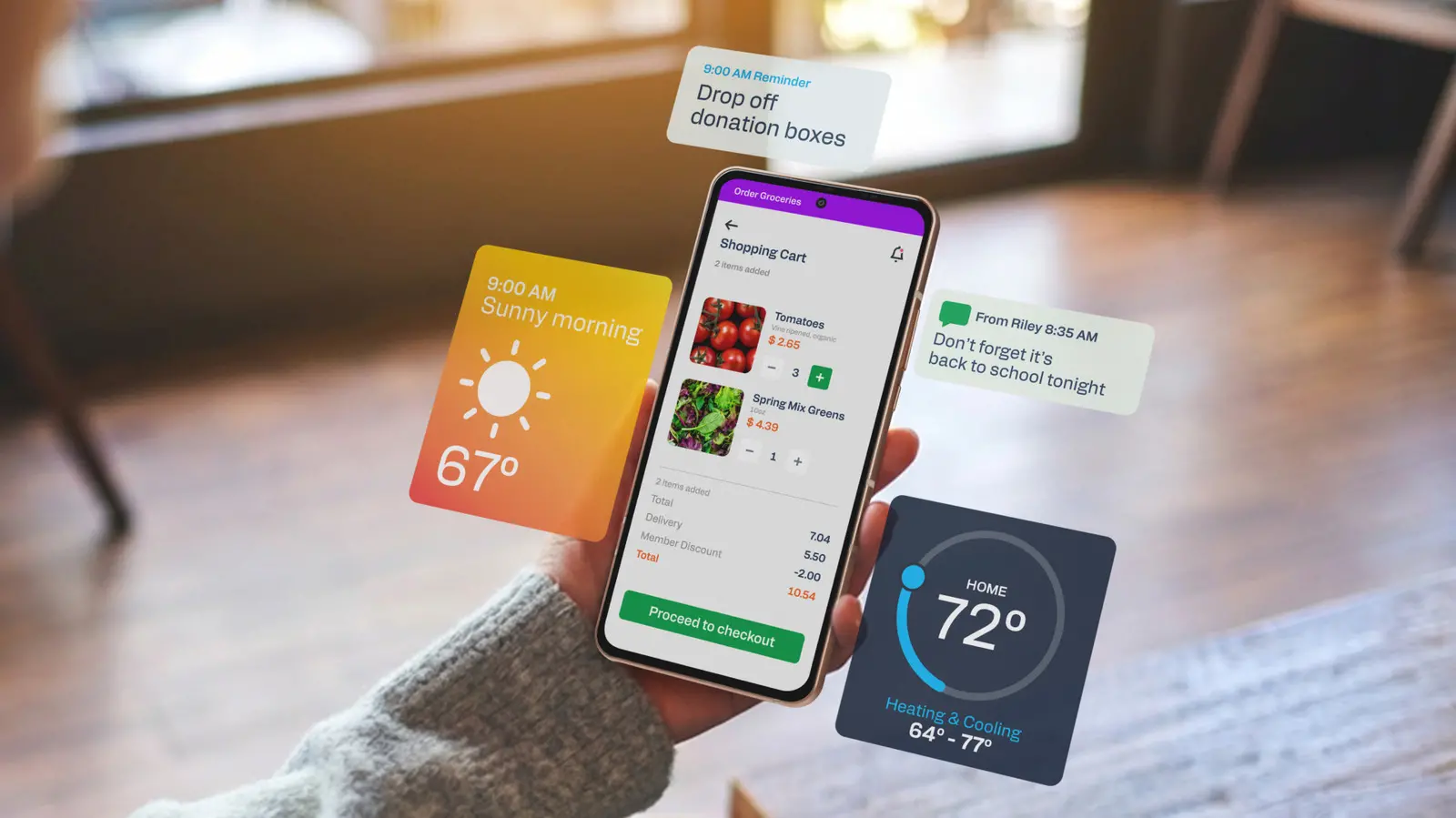
One of the standout new additions is the Snapdragon Smooth Motion UI technology. This feature uses intelligent frame interpolation and dynamic refresh rate adjustment to create a smoother user interface experience. It is particularly beneficial for budget and midrange phones where display hardware may be limited to 60 Hz or 90 Hz panels. By reducing stutter and lowering perceived latency, Qualcomm aims to make even affordable handsets feel more responsive.
AI plays a major role in the camera and display capabilities. Both chips include an AI engine that can power real-time enhancements such as automatic white balance, scene detection, and portrait mode effects. The Intelligent Night Vision feature on the 6-series uses multi-frame noise reduction and AI to brighten low-light scenes without excessive grain. Meanwhile, the AI digital zoom leverages machine learning to upscale images up to 100x, though results will still depend on the camera hardware and software implementation.
On the connectivity side, the Snapdragon 6 Gen 5’s inclusion of Wi-Fi 7 and Bluetooth 6.0 sets a new standard for midrange phones. Wi-Fi 7 offers lower latency and higher throughput, which benefits streaming and online gaming. Bluetooth 6.0 with Channel Sounding improves the precision of location tracking for accessories, potentially allowing users to find lost earbuds within centimeters. The Snapdragon 4 Gen 5, while limited to Wi-Fi 5 and Bluetooth 5.1, still provides solid baseline connectivity for budget devices.
Market implications and availability
The introduction of these chips comes at a time when smartphone prices have been steadily rising due to inflation and component shortages. Qualcomm’s focus on the affordable segment allows manufacturers to offer enhanced features without significantly increasing retail prices. The company has already confirmed that handsets using the Snapdragon 6 Gen 5 and 4 Gen 5 will launch from Honor, Redmi, Oppo, and Realme. These brands are known for aggressively pricing their phones in emerging markets like India, Southeast Asia, and parts of Europe.
Historical context is important here. Qualcomm’s 6-series and 4-series chips have long been the workhorses of the midrange and budget segments. The Snapdragon 6 Gen 4, for instance, powered popular models such as the OnePlus Nord N30 and the Xiaomi Redmi Note 12 series. The new generation brings performance gains that narrow the gap with flagship chips from just a few years ago. For consumers, this means that a $300 phone in 2027 could offer UI smoothness, camera quality, and gaming performance comparable to a $600 phone from 2024.
Competition remains fierce, particularly from MediaTek’s Dimensity series and Unisoc’s chips. MediaTek’s Dimensity 7200 and 7300 offerings compete directly with the Snapdragon 6 Gen 5, while the Helio series targets the same budget space as the Snapdragon 4 Gen 5. Qualcomm’s advantage often lies in its stable driver support, wide ecosystem of software optimizations, and stronger brand recognition among consumers. With Smooth Motion UI and AI enhancements, Qualcomm is trying to differentiate its midrange and budget chips on user experience rather than just raw specs.
The exact release timeline is not set, but Qualcomm expects commercial devices to appear in the second half of 2026 and early 2027. Given the typical adoption cycle, we can expect to see the Snapdragon 6 Gen 5 in phones around the holiday season of 2026, while the 4 Gen 5 may show up in even lower-priced models early the following year. Manufacturers will likely announce specific products at industry events like MWC or product launches closer to those dates.
Source: Engadget News