

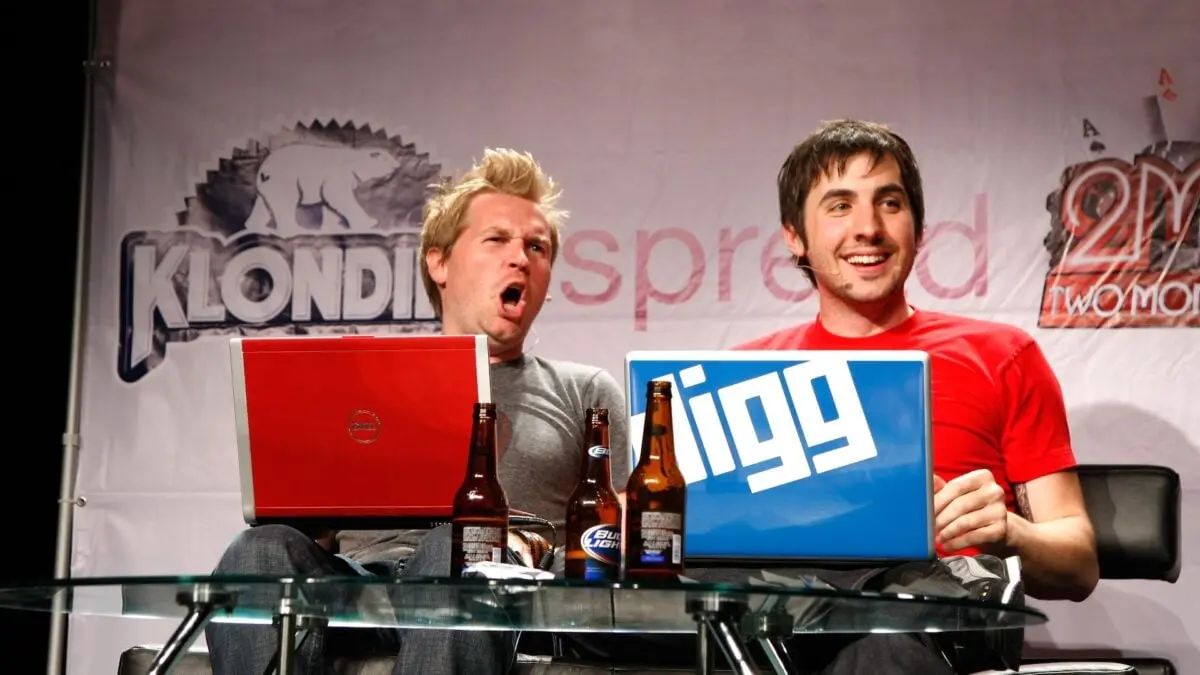
The phrase “Digg is back” has become something of an internet meme itself, recurring every few years with each new iteration of the pioneering social news platform. Founded in 2004 by Kevin Rose, Digg helped democratize content discovery long before algorithms took over. Users voted stories up or down—a simple mechanic that could send a post viral, crashing servers under what became known as the “Digg Effect.” The site was eventually eclipsed by Reddit and went through a series of ownership changes, but the brand never completely disappeared. Now, in 2026, Digg has returned once more, this time as a curated aggregator of artificial intelligence news.
As of May 2026, the Digg.com homepage greets visitors with a cheerful “Hello Again” and directs them to di.gg/ai, a dedicated subdomain that serves as the platform’s first “vertical” in a planned series. According to CEO Kevin Rose, who reacquired Digg last year alongside Reddit co-founder Alexis Ohanian, AI is the starting point because of the breakneck pace at which developments unfold. “Papers, launches, threads, hot takes flying past faster than anyone can keep up with,” reads the site’s description. The idea is to aggregate signal from noise, making the relentless torrent of AI news more digestible.
The new Digg is minimalist and beige, resembling a stripped-down feed. At the top is a “Highlights” section featuring the most popular stories, determined not by user votes this time but by analyzing activity on X. Each article is accompanied by circular avatars of users who have posted about it on X, along with sentiment data that Digg’s backend pulls in real time. This approach, reported by TechCrunch, allows Digg to surface what the broader online community is buzzing about without relying exclusively on its own user base. It is a clever way to leverage the collective curation of millions while maintaining editorial control over which signals matter.
This relaunch follows a false start earlier in 2026. In January, Digg came back with grand ambitions, promising a “human-centered alternative” to other platforms, emphasizing transparency and rewarding human effort. The press release at the time outlined plans for AI innovations to enhance user experience. However, about two months ago, that version shut down and the company laid off most of its staff. The current iteration is leaner, focusing entirely on AI news curation. Whether this version gains traction remains to be seen, but the shift is a telling sign of how the internet landscape has changed since Digg’s heyday.
To understand the significance of this move, it helps to remember what Digg meant for the early social web. Before upvotes and downvotes became standard, before the term “breaking the internet” entered the lexicon, Digg provided a simple button that could be embedded on any website. The “Digg This” button appeared on sites as diverse as the New York Times and personal blogs, allowing readers to submit stories to the Digg community. When a story gained enough votes, it landed on the front page, often resulting in a traffic spike that could overwhelm servers. This was the Digg Effect, a precursor to the viral dynamics we now take for granted.
The platform’s decline is well documented. In 2010, Digg underwent a controversial redesign (version 4) that alienated its core user base. Many migrated to Reddit, which had a similar voting system but stronger community structure. Digg was sold to Betaworks in 2012 for a fraction of its former value, then to LinkedIn co-founder Reid Hoffman in 2015, and later to a series of owners. Through each sale, the site limped along, never regaining its former glory but never quite dying. The brand persisted, a ghost of internet history.
Now, with the rise of generative AI, Rose sees an opportunity to carve out a niche. The di.gg/ai feed pulls from X because that is where much of the AI conversation happens—researchers, entrepreneurs, and critics share papers, launch announcements, and hot takes in a relentless stream. Digg acts as a filter, presenting the stories that are generating the most discussion. The round avatars next to each article give a visual sense of community engagement, though the “community” here is not Digg itself but the broader X ecosystem. It is an elegant solution for a platform that no longer hosts its own large social network.
Critics might argue that this makes Digg little more than a repackaged version of X’s trending topics, but the curation layer adds value. By focusing specifically on AI, Digg intends to become a specialized hub. Rose has stated that AI is just the first vertical; other topics will follow, possibly ranging from technology to finance to culture. The challenge will be building an audience that finds this aggregation useful enough to visit regularly, especially when countless other newsletters, podcasts, and websites already cover AI news extensively.
Early reactions have been mixed. Some longtime internet users feel nostalgia for the Digg brand and are curious to see if the new model succeeds. Others see it as a desperate attempt to monetize a fading name. For now, the site is ad-free and minimal. There is no obvious revenue model, though sponsored posts or premium features could emerge later. The backing of Rose and Ohanian gives it credibility, and both have deep experience in building internet communities.
One of the more interesting aspects of this relaunch is how it reflects the current state of online information consumption. We are drowning in content, especially around rapidly evolving fields like AI. Aggregators that promise to cut through the clutter have perennial appeal. Digg’s previous incarnations relied on active user participation—people voted, commented, and submitted. The new Digg largely bypasses that, using passive data from X to determine what matters. It is a shift from participatory democracy to observational curation. Whether users will feel invested in a platform they don’t actively shape is an open question.
Historically, Digg’s user base was passionate and engaged; they submitted stories and debated in comments. The site had a distinct culture that influenced early internet memes and news cycles. That culture evaporated after the v4 redesign. The new Digg does not even attempt to recreate that; it is a top-down editorial product, albeit one that listens to the crowd. The lack of community features might make it feel sterile, but it also eliminates the toxicity that plagued earlier social platforms.
At a broader level, the return of Digg highlights the cyclical nature of internet trends. What was once dismissed as obsolete can be revived with a fresh angle. The brand recognition is still there—many people have heard of Digg even if they never used it. Tapping into that awareness is easier than starting from scratch. And by targeting a specific vertical (AI) rather than trying to be everything to everyone, Digg is taking a focused approach that might actually work better than its previous broad attempts.
It is still early days. The site launched in its current form in mid-May 2026, and time will tell whether it gains a loyal following. For now, it offers a clean, fast way to see what the X community is debating in AI. The articles link directly to external sources, so Digg is not hosting content but acting as a gateway. This keeps operational costs low and allows the team to iterate quickly. If the AI vertical succeeds, expect expansions into other fast-moving fields like biotech, climate, or politics.
Ultimately, the Digg story is one of constant reinvention. From the peak of the social news era to a series of pivots, sales, and closures, the brand has survived because someone always sees value in it. Whether this new incarnation will change the internet as profoundly as the first one remains unlikely, but it doesn’t need to. It just needs to be useful enough for a niche audience that feels overwhelmed by the pace of AI progress. If it can do that, then Digg will have found its second—or third, or fourth—act.
Source: Gizmodo News