

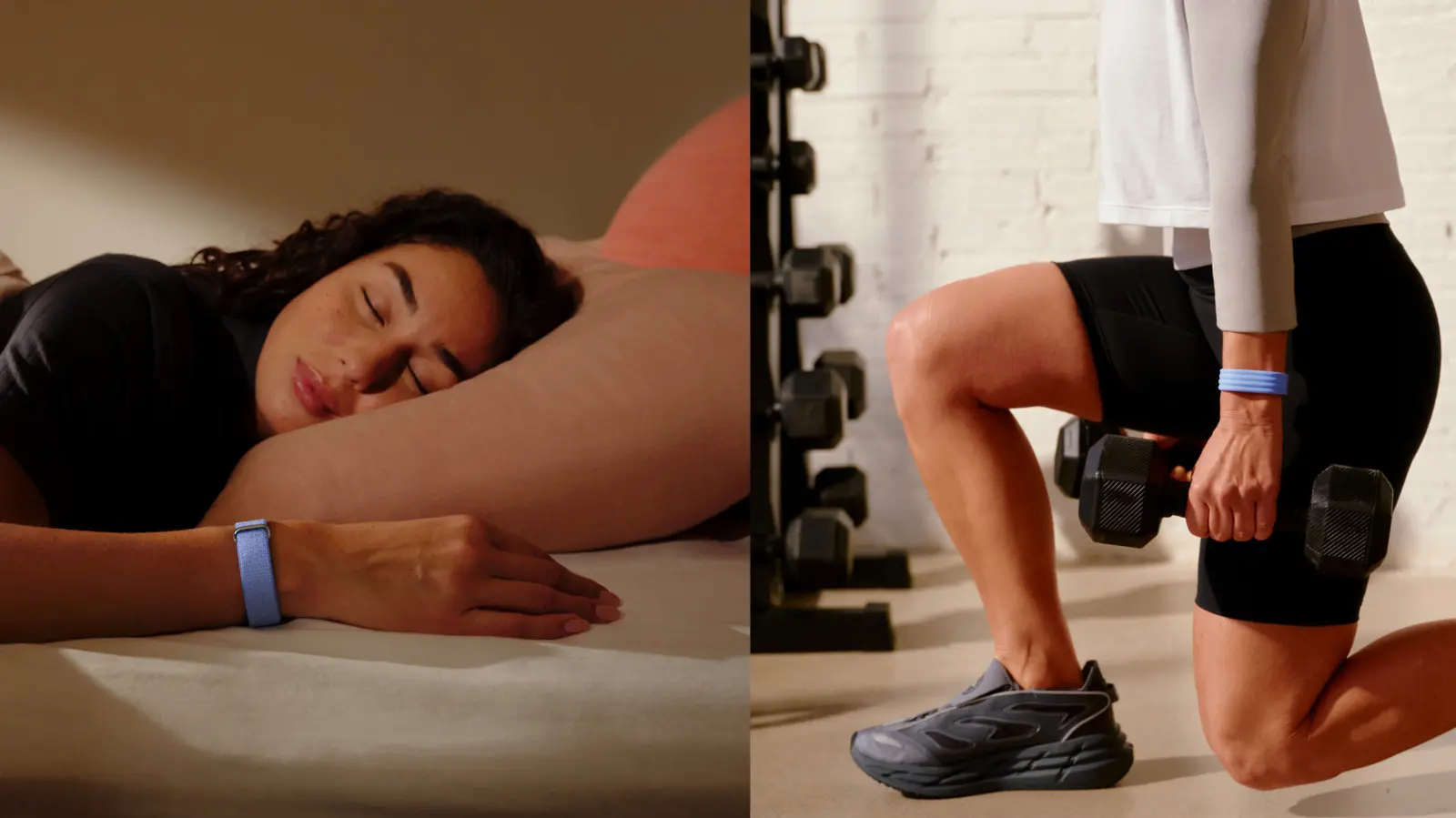
Google has officially unveiled the Fitbit Air, a screenless wearable that represents a strategic shift toward passive, AI-enhanced health tracking. First teased in March, the device is now available for pre-order at $100, positioning it as a direct competitor to Whoop bands and other minimalist fitness trackers. The Fitbit Air is essentially a Fitbit tracker freed from its traditional band, designed to be worn anywhere—on the wrist, chest, or even clipped to clothing—depending on the accessory.
According to Google’s General Manager for Health, Rishi Chandra, the Fitbit Air is 25% smaller than the Fitbit Luxe and 50% smaller than the Inspire 3. Weighing just 12 grams with a band and 5.2 grams without, it aims to be virtually unnoticeable during daily activities, exercise, and sleep. Google claims the device was rated “more comfortable than leading competitors” in an independent consumer perception study conducted in 2025, focusing on popular U.S. wearables.
Design and Comfort
The Fitbit Air’s design eliminates screens and buttons entirely, relying on a vibration motor for feedback. The device is water-resistant to 50 meters and charges via a magnetic, bi-directional dock. Google offers three initial band options: a micro-adjustable Performance Loop Band, a sweatproof and wetproof Active silicone band, and an Elevated Modern Band that turns the tracker into a fashion bracelet. Additional accessory types, such as chest straps or necklaces, are under consideration but not yet available.
This form factor mirrors the philosophy of Whoop, which focuses on continuous, unobtrusive data collection. However, Google differentiates the Fitbit Air by integrating its advanced machine learning models, which the company claims are 15% more accurate than previous Fitbit algorithms. The sleep score has also been improved to “better reflect recovery,” leveraging heart rate variability (HRV) and other metrics.
Health and Fitness Tracking
The Fitbit Air continuously monitors heart rate, sleep stages, and detects signs of atrial fibrillation (AFib) through irregular heart rhythm notifications. It automatically recognizes common workouts like running, biking, walking, rowing, and elliptical training. Users can manually start sessions for over 40 activities via the app, and more than 140 activity types can be logged retrospectively. The device also provides weekly cardio load and readiness scores, alongside basic metrics like steps, distance, and active minutes.
Google’s Smart Wake feature uses the vibration motor to rouse users at optimal times within their sleep cycle. The device requires users to view data on their phone, as it has no built-in display. This passive approach emphasizes convenience and battery life: the Fitbit Air lasts up to seven days on a single charge and can gain a full day’s power in just five minutes of charging.
AI-Powered Health Coach
A key differentiator is the integration of the Google Health Coach, a Gemini-powered conversational interface first introduced in public preview in October 2025. This AI coach creates dynamic, personalized fitness plans that adapt to real-time performance data and schedule changes. It can incorporate data from menstrual cycle tracking and other vital medical information, with Google emphasizing data privacy and security.
The Health Coach represents Google’s broader push to infuse AI into health devices, following the trend seen in the Pixel Watch and Google Health app. By leveraging large language models, the coach can offer proactive insights and workout suggestions without requiring manual input from the user.
Special Edition and Pricing
Google has also announced a special edition in collaboration with basketball star Stephen Curry, who serves as the company’s “Performance Advisor.” The Curry Edition features a raised interior print for increased airflow, signature design details, and an additional water-resistant coating. It costs $130, with each purchase of any Fitbit Air including three months of Google Health Premium. The devices are expected to ship on May 26.
The Fitbit Air enters a competitive market dominated by Whoop, Oura Ring, and other screenless trackers. Its $100 price point undercuts Whoop’s subscription model, though Google’s offering includes a free tier with basic features and a premium subscription for deeper insights. The availability of multiple band styles and the promise of future accessories may appeal to users seeking customization.
Analysts see the Fitbit Air as a strategic move by Google to expand its wearable ecosystem beyond smartwatches, targeting users who prioritize comfort and simplicity over constant screen interaction. The integration of AI coaching could also drive subscription revenue and deepen user engagement with Google’s health platform.
As wearable technology evolves toward more passive and intelligent monitoring, the Fitbit Air represents a significant step in merging Fitbit’s legacy of activity tracking with Google’s AI capabilities. Its success will depend on user adoption of the screenless form factor and the perceived value of the AI-driven health coach. Google has not yet announced plans for international availability beyond the initial U.S. launch.
Source: Engadget News