

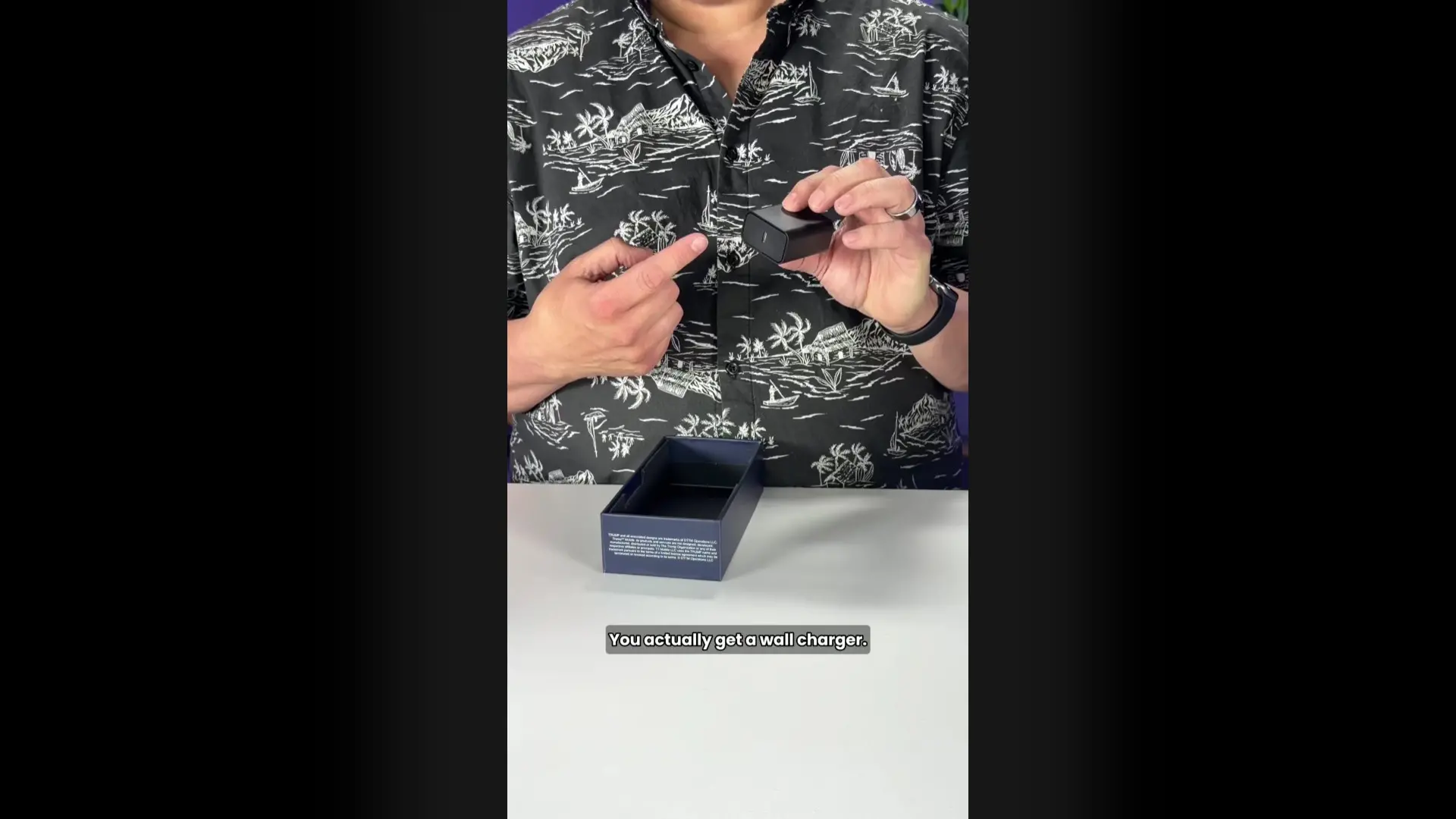
The Trump Mobile T1 smartphone has finally reached the hands of some preorder customers after a significant delay that led many to believe the device was nothing more than vaporware. A recent unboxing video posted online shows what buyers can expect when they open the box, and it includes a few pleasant surprises that have become rare in the modern smartphone market.
Unlike the standard packaging from Apple, Google, or Samsung, which typically includes only a USB-C cable (and often no charging brick or case), the Trump Phone T1 ships with a braided USB-C cable, a wall charger, and a clear protective case. This is a welcome return to the days when phone manufacturers included everything needed to get started without additional purchases. While the charging speed and power output of the included charger have not been specified, the mere presence of a charger in the box is a notable advantage over most flagship and mid-range competitors.
The device itself has a plastic back panel and comes preloaded with two prominent applications: Truth Social (the social media platform founded by Donald Trump) and Doctegrity (an encrypted communication app). These preloaded apps are likely to appeal to supporters of the former president, but they also raise questions about the overall user experience and potential bloatware. The phone's camera has been observed to add a watermark to photos, displaying the T1 logo along with the time and date. It is currently unclear whether this watermark can be disabled in the settings, which could be a deal-breaker for users who value clean image output.
The HTC Connection
Speculation continues to mount that the Trump Mobile T1 is simply a rebranded version of the HTC U24 Pro, a mid-range smartphone released in 2024. HTC has long struggled to compete with industry giants like Apple, Samsung, and Google, and the company has increasingly turned to white-label production for other brands. If the Trump Phone is indeed an HTC U24 Pro with a new skin and preloaded apps, consumers should be aware that they are essentially purchasing a phone with 2024 hardware specifications. The HTC U24 Pro originally featured a 6.8-inch OLED display, a Snapdragon 7-series processor, and a triple camera setup. While these specs were competitive at the time of release, they are now overshadowed by newer devices from established brands.
The decision to use an existing HTC design may have been driven by cost and time constraints. Building a smartphone from scratch requires enormous investment in research, development, supply chains, and certification. By leveraging HTC's existing hardware, Trump Mobile could bring a product to market more quickly and with lower risk. However, this approach also means that the device lacks the unique differentiation that many consumers expect from a brand with such a high-profile name. The phone's software experience is also uncertain: while it runs Android, the customizations made by Trump Mobile may not receive timely security updates or major OS upgrades, a common problem with smaller manufacturers.
Availability and Delivery Concerns
Even before the unboxing, the Trump Phone has been mired in controversy regarding its availability. Preorder customers experienced lengthy delays, with some worried that the phone would never ship at all. The situation was further complicated by the fact that CNET, a major technology media outlet, claimed that their preorder was expedited after they identified themselves as journalists. This has led to allegations that the company is selectively fulfilling orders to generate positive press and rebuild hype, rather than treating all customers equally. For many buyers, the idea of paying hundreds of dollars for a device that may or may not arrive is a significant deterrent.
Furthermore, security researchers have raised alarms about potential data leaks from the Trump Mobile website. If the e-commerce platform handling preorders is not properly secured, customer personal information could be exposed. In an era where data breaches are all too common, this is a serious concern for anyone who has submitted their name, address, payment details, and contact information to the site. The Trump Mobile brand has not yet released a comprehensive privacy policy or data handling statement, which only adds to the uncertainty.
It is also worth considering the after-sales support and warranty. Larger smartphone manufacturers like Samsung and Google have established customer service networks, repair centers, and software update commitments. A small, newly formed brand like Trump Mobile may not have the infrastructure to provide similar levels of support. If the phone develops a hardware issue or if a critical security flaw is discovered, owners might be left with limited recourse.
Comparing the Trump Phone to the Competition
When evaluating the Trump Phone, it is essential to compare it to other smartphones available in the same price range. Many affordable Android phones from companies like Samsung (Galaxy A series), Google (Pixel A series), and Motorola (Moto G series) offer excellent performance, reliable software updates, and strong build quality. While the Trump Phone includes a charger and case, these benefits are relatively minor compared to the peace of mind that comes with a trusted brand. For example, the Google Pixel 7a provides a clean Android experience, guaranteed security updates for years, and a camera that rivals much more expensive devices. Similarly, Samsung's Galaxy A54 offers a vibrant display, long battery life, and a robust software policy.
The inclusion of a charger and case might save the buyer a few dollars upfront, but the total cost of ownership could be higher if the phone lacks software support, suffers from poor performance, or fails to meet everyday usage expectations. Additionally, the preloaded apps may not be removable, wasting storage space and potentially tracking user behavior. For consumers who prioritize privacy, a phone from a manufacturer with a transparent data policy is a far safer choice.
Historical Context of Political Branded Phones
The Trump Phone is not the first attempt to create a smartphone tied to a political figure or ideology. Throughout the 2010s, several "Trump" or "Patriot" phones appeared on the market, often as low-cost devices rebranded with patriotic themes. These products typically failed to gain significant traction due to poor specifications, unreliable supply chains, and a lack of long-term support. The current version appears to follow the same pattern, though with a slightly higher production budget thanks to the apparent partnership with HTC.
It remains to be seen whether the Trump Phone can carve out a niche. The device appeals to a specific demographic that values political alignment in their consumer electronics. However, the broader smartphone market is unforgiving, and buyers expect their devices to perform flawlessly out of the box and for years to come. A phone that is essentially a recycled mid-range model with controversial branding may not meet those expectations.
Technical Specifications and Features
Based on the unboxing and speculation, here is a summary of what the Trump Phone likely offers: It features a 6.8-inch OLED display with a 120Hz refresh rate, a Qualcomm Snapdragon 7 Gen 1 or similar chipset, 8GB of RAM, and 256GB of storage. The rear camera array includes a 108MP main sensor, an 8MP ultrawide, and a 2MP macro or depth sensor. The front-facing camera is likely 32MP. The battery capacity is around 4,600mAh with support for 30W fast charging. The phone runs Android 14 with a customized launcher and preloaded apps.
While these specifications are not terrible, they are not exceptional either. In the same price range, buyers can find devices with the more powerful Snapdragon 8 series chipsets, better camera performance, and more reliable software. The Trump Phone's main differentiator is its branding and the inclusion of physical accessories. For many users, these factors will not outweigh the risks associated with buying from an unproven manufacturer.
Security and Privacy Implications
Security experts have pointed out several red flags surrounding the Trump Phone. The preloaded Doctegrity app claims to offer encrypted messaging, but the details of its implementation are unclear. If the encryption is poorly implemented or if the app sends data to servers controlled by the phone's manufacturer, user privacy could be compromised. Moreover, the watermarking feature suggests that the camera software may be collecting metadata, and users have no way to verify how that data is handled.
The phone's operating system is based on Android, but the customizations made by Trump Mobile could introduce vulnerabilities. Smaller manufacturers often fail to provide timely security patches, leaving devices exposed to known exploits. Given that the phone is aimed at a politically active audience, it could become a target for cyber attacks or surveillance. Buyers should weigh these risks carefully before making a purchase.
Another concern is the possibility of data collection for political purposes. While there is no evidence that the Trump Phone is specifically designed to gather user data for campaigns or advocacy groups, the company's close ties to a political movement raise questions. Consumers in the modern era are increasingly wary of how their personal information is used, and phones from Google and Apple offer transparency reports and clear privacy controls that a new brand like Trump Mobile may not match.
Should You Buy the Trump Phone?
Given the numerous uncertainties, it is difficult to recommend the Trump Phone to the average consumer. The device may appeal to dedicated supporters who want to show their allegiance, but for most people, the practical drawbacks outweigh the emotional benefits. The lack of a proven track record, ambiguous software support, potential security risks, and the possibility of the company disappearing overnight are significant deterrents. For the same amount of money, there are dozens of excellent Android phones from established brands that come with warranties, regular updates, and a wide range of accessories.
The inclusion of a charger and case, while welcome, is a minor convenience that does not justify the potential problems. In fact, many third-party chargers and cases are inexpensive and of higher quality. The decision to buy a smartphone should be based on performance, reliability, and long-term value, not on political branding. The Trump Phone may ultimately become a collector's item or a novelty, but it is unlikely to become a mainstream success.
As the first units reach customers, more information will undoubtedly emerge about the phone's real-world performance and the company's fulfillment practices. For now, potential buyers should exercise caution and wait for independent reviews and user reports before committing their money.
Source: Android Authority News