
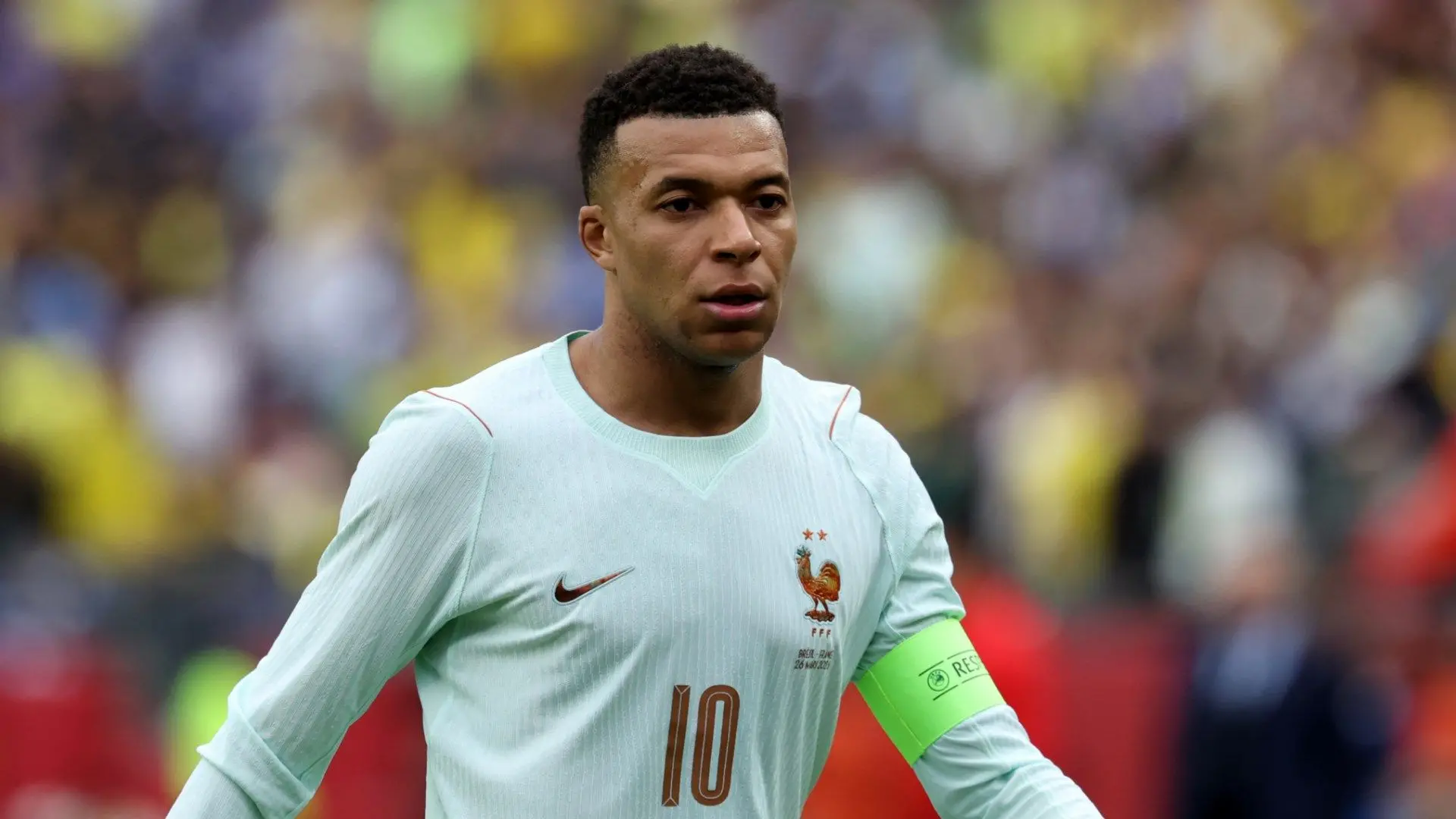
Frank Leboeuf, a World Cup winner with France in 1998, has sparked fresh debate by openly questioning Kylian Mbappé's suitability as captain of the French national team. In a candid interview with SportsBoom, the former Chelsea and France defender stated that Mbappé is "too selfish" to lead the squad to glory at the 2026 World Cup. Leboeuf's comments come at a pivotal time, with France set to compete in the tournament across the United States, Canada, and Mexico this summer.
Leboeuf's Criticism: A Question of Values
Leboeuf, who formed part of the iconic French defense that won the World Cup on home soil in 1998, did not hold back in his assessment. "Nein, Kylian Mbappé ist für mich kein Anführer, weil er in seinen Gedanken, in seiner Denkweise zu egoistisch ist," he said. Translating his remarks, Leboeuf explained that while Mbappé is undoubtedly a talented player and a polite individual, his mindset does not align with the values Leboeuf associates with true leadership. "I know him only briefly, but his way of thinking about football does not match my values in this sport," Leboeuf added. The criticism is particularly pointed given that Mbappé currently captains Les Bleus, a role he inherited after Hugo Lloris retired from international duty.
Who Should Be Captain? Leboeuf's Alternatives
Leboeuf proposed alternative candidates for the armband, pointing to players who exemplify selflessness and collective spirit. He highlighted Arsenal's William Saliba and the experienced N'Golo Kanté as players who naturally prioritize the team over personal glory. "Deshalb mag ich Leute wie William Saliba und N'Golo Kante, Spieler, die bereit sind, sich für die Mannschaft aufzuopfern," Leboeuf stated. "That is the difference for me, and that counts the most." He also praised Antoine Griezmann for his leadership qualities and referenced a comment from Ousmane Dembélé about working defensively, emphasizing that a team requires all players to contribute. Leboeuf's remarks suggest that while Mbappé is a superstar, he may not be the best team player—a critique that echoes some earlier observations from his time at Paris Saint-Germain.
Comparing Generations: 1998 vs. 2026
Leboeuf also weighed in on the perennial debate of comparing France's current squad to the legendary 1998 team. While acknowledging that the modern generation possesses superior attacking firepower, he expressed concerns about defensive solidity. "It is hard to compare generations. The football is different, the referees are different. Even the ball itself is different," he said. "But I believe offensively they are better than we were. Defensively, we were stronger. It's the overall aspect of the game that we mastered." Leboeuf recalled that the 1998 team conceded only two goals en route to the title, while scoring 15 or 16. He believes that while scoring will not be a problem for this French side, keeping clean sheets will be the main challenge.
Mbappé's Real Madrid Season: A Tale of Individual Brilliance
Mbappé's personal performances during the 2025–26 season have been nothing short of spectacular. The 27-year-old scored 42 goals and provided 7 assists in 44 appearances for Real Madrid, winning the La Liga Golden Boot for the second consecutive season with 25 league goals, and also topping the Champions League scoring charts with 15 goals. Since joining Real Madrid on a free transfer from Paris Saint-Germain, he has netted 86 goals in 103 matches. However, these individual achievements have been overshadowed by Real Madrid's failure to win major silverware, leading to fan frustration and a perception that Mbappé's presence does not guarantee team success. This dynamic mirrors some of the criticism he faced at PSG, where despite prolific scoring, the team's collective achievements fell short of expectations. Leboeuf's comments tap into a broader narrative about whether a player can be both a generational talent and a unifying leader.
Historical Context: Leadership and the French Captaincy
The captaincy of the French national team has always carried heavy responsibility, especially given the country's proud footballing history. Previous captains like Didier Deschamps, Laurent Blanc, Zinedine Zidane, and Hugo Lloris were not only great players but also figures who commanded respect through their selflessness and tactical intelligence. Mbappé inherited the armband from Lloris after the 2022 World Cup final loss to Argentina, a match in which France fought back from 2-0 down before losing on penalties. Since then, Mbappé has led the team through European Championship qualifiers and the 2024 Euros, where France reached the semi-finals. Yet critics argue that his leadership style remains more focused on individual brilliance than inspiring teammates. The 2026 World Cup will be a defining test for Mbappé's ability to unite a squad that includes rising stars like Saliba and seasoned veterans like Kanté and Griezmann.
Saliba and Kanté: The Selfless Professionals
William Saliba, at 25, has emerged as one of the world's best central defenders at Arsenal, known for his composure and defensive intelligence. His rise has been meteoric, and he is now a key figure in both club and country. N'Golo Kanté, now 34, remains an engine in midfield, renowned for his work rate and ability to break up play. Both players have been praised for their humble, team-first attitudes. Saliba's leadership potential has been noted by many, but he is still relatively young and has not yet been handed a major role in the national team's hierarchy. Kanté, a World Cup winner in 2018, has seen his playing time reduced due to injuries and age, but his influence in the dressing room remains significant. Leboeuf's endorsement of these two highlights his belief that leadership should derive from character, not just talent.
The Road to 2026: Can Mbappé Prove the Critics Wrong?
As France prepares for the 2026 World Cup, manager Didier Deschamps must navigate the task of blending immense offensive talent with defensive reliability. The team boasts a wealth of attacking options including Ousmane Dembélé, Randal Kolo Muani, and Marcus Thuram, alongside the creative genius of Antoine Griezmann. Defensively, the emergence of Saliba and the continued presence of Lucas Hernández offer hope, but concerns about conceding goals persist. Mbappé's individual brilliance will be crucial, but as Leboeuf suggests, true success at the World Cup level requires a collective mindset. The 2022 final demonstrated that even with Mbappé's hat-trick, the team could fall short. The question lingering is whether Mbappé can evolve from a star into a leader who elevates those around him. Leboeuf's critique may be harsh, but it reflects a common sentiment among purists who value the intangible qualities of captaincy.
Meanwhile, the French Football Federation and Deschamps have not responded publicly to Leboeuf's comments. Mbappé himself has focused on his performances, stating in recent interviews that he is committed to giving his best for the national team. The pressure is mounting, and the 2026 World Cup will not only test France's talent but also its unity under Mbappé's leadership. Whether he can silence critics like Leboeuf remains to be seen, but one thing is certain: the debate over his captaincy is far from over.
Source: Goal News